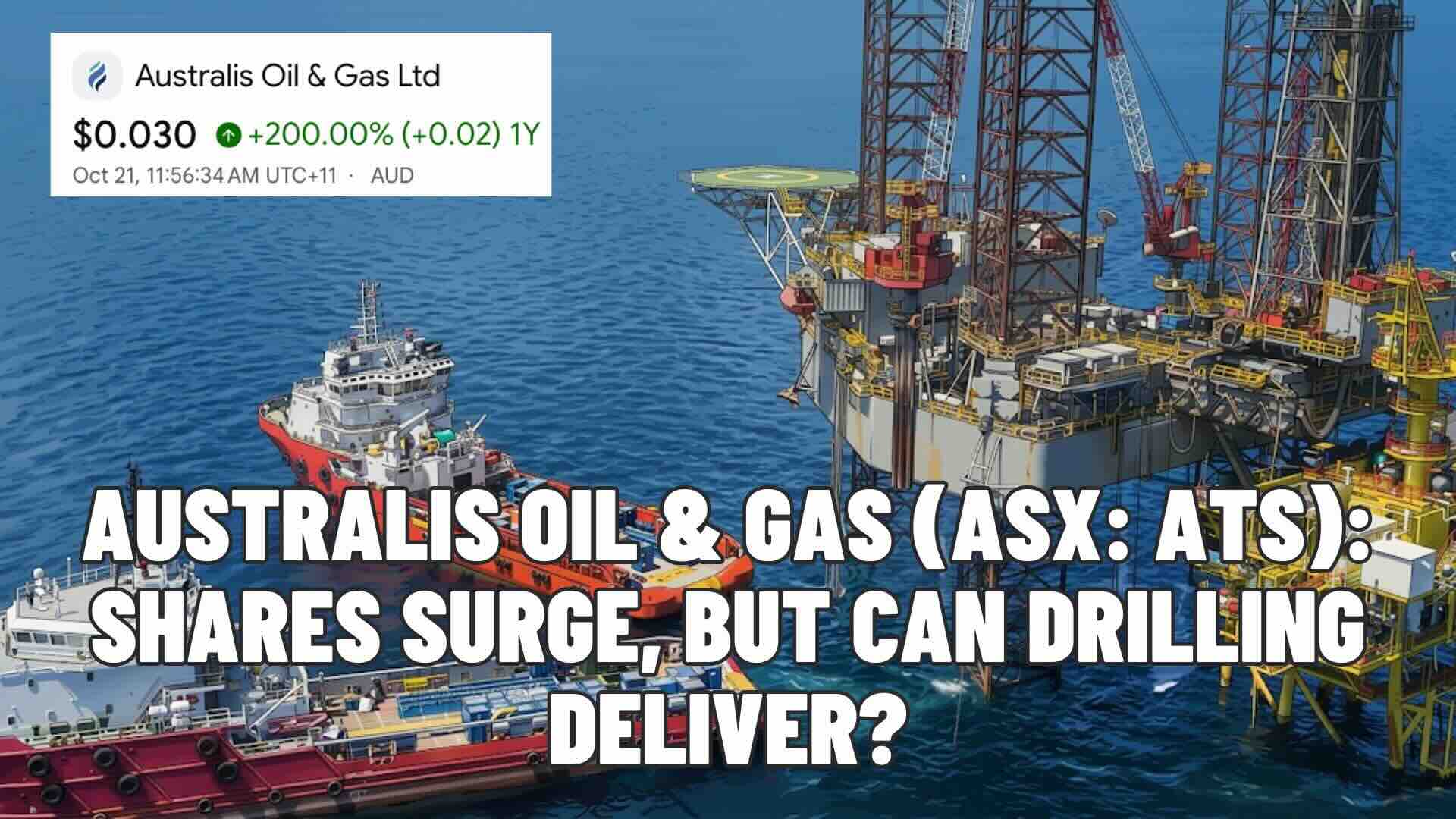
Australis Oil & Gas has gained more than 50% year-to-date and approximately doubled in value over the past 12 months, putting its US oil assets firmly on our radar. The rally raises an important question: can the company's upcoming drilling programme translate growing investor expectations into commercially meaningful production?
The numbers that matter
- More than 50%: year-to-date share-price gain.
- Approximately 2x: share-price increase over the past 12 months.
- US$11.2 million: cash and cash equivalents at 30 June 2026.
- 47,300 net acres: Australis' TMS Core landholding.
- 10% working interest: retained exposure generating sales from existing production.
The real story is the drilling partner
Australis is focusing on developing its Tuscaloosa Marine Shale (TMS) acreage in the US, supported by a development partnership designed to reduce its upfront funding burden. The Willson 1H well received permit approval in July, with drilling targeted for the fourth quarter of 2026, subject to rig availability. Preparations for a second carried well, Mathieu 1H, were also under way.
The partnership offers a potential route to development upside without Australis funding the entire initial programme. However, June-quarter cash declined from US$13.6 million to US$11.2 million, highlighting why funding discipline remains important as the company transitions towards future development.
The investment test: Can resources become reserves?
The opportunity is substantial, but we see a critical distinction between resource potential and commercial production. Australis' reported 62 million barrels combines proved and probable reserves with contingent resources, which carry different levels of certainty and development risk.
Successful drilling could improve confidence in the acreage, but disappointing well performance or higher-than-expected costs could undermine the economics. The share-price rally also raises the bar for evidence that the company's development strategy can deliver.
Investor Insight: The well result matters more than the resource headline
Our view is that Australis offers leveraged exposure to successful TMS development, but the investment case remains unproven. We would focus on initial production rates, estimated ultimate recovery and well costs, alongside the precise terms of the carried programme. Strong results could validate commercial potential, while weak results could expose a gap between the market's expectations and the underlying economics.
The verdict: Execution is the catalyst
Australis has a development partner, substantial acreage and a potential pathway to value creation. Yet the share-price gains will need to be supported by tangible operating progress. Can the upcoming drilling campaign demonstrate repeatable commercial production and justify the market's growing expectations?

 Mark Elzayed•






