Sandfire Resources (ASX: SFR) has started FY27 with strong operating earnings, a sizeable cash buffer and fresh evidence that its existing mines could hold more copper and polymetallic mineralisation than currently defined. The more interesting development may be the combination of near-term cash generation and opportunities to extend mine life, although rising energy costs and the valuation attached to its shares remain important considerations.
Key numbers
- 38.9kt: Group copper-equivalent production in the September quarter, equivalent to 25% of the midpoint of FY27 guidance.
- US$480 million: Quarterly sales revenue.
- US$272 million: Underlying EBITDA, representing a 57% margin.
- US$342 million: Net cash at 30 September 2026, down from US$353 million at June-end.
- US$117 million: First fully franked dividend paid in four years.
The latest development
Sandfire's September-quarter report confirms that its two operating hubs, MATSA in Spain and Motheo in Botswana, are delivering production broadly in line with expectations. Group copper-equivalent output increased 9% year on year, although it fell 19% from the unusually strong June quarter.
MATSA produced 22.7kt of copper equivalent, while Motheo contributed 16.1kt. Sandfire retained its FY27 production, cost and capital expenditure guidance, providing a relatively stable operating foundation.
However, the financial performance benefited from buoyant commodity markets and exceptionally low treatment and refining charges. These charges influence the amount smelters deduct when processing metal concentrates. Their weakness supported margins, but we would not automatically extrapolate the 57% EBITDA margin across the full financial year.
The company also reported fresh high-grade drilling results at La Juliana, close to its existing MATSA underground operations. This could prove strategically valuable because mineralisation near established infrastructure may be easier to incorporate into an operating mine than a remote discovery requiring substantial new development.
What stands out to us
Sandfire's financial position gives it flexibility that many smaller mining companies lack. Its US$342 million net cash balance provides capacity to fund exploration, maintain existing operations and progress growth projects without immediately depending on equity markets.
The operating cost picture is more complicated. MATSA's implied C1 cost increased to US$1.18 per pound from US$0.47 in the previous quarter, while Motheo's stood at US$0.65 per pound. These figures are affected by production mix, by-product credits and other operating factors, so the quarterly movements should not be interpreted as a simple deterioration in underlying efficiency.
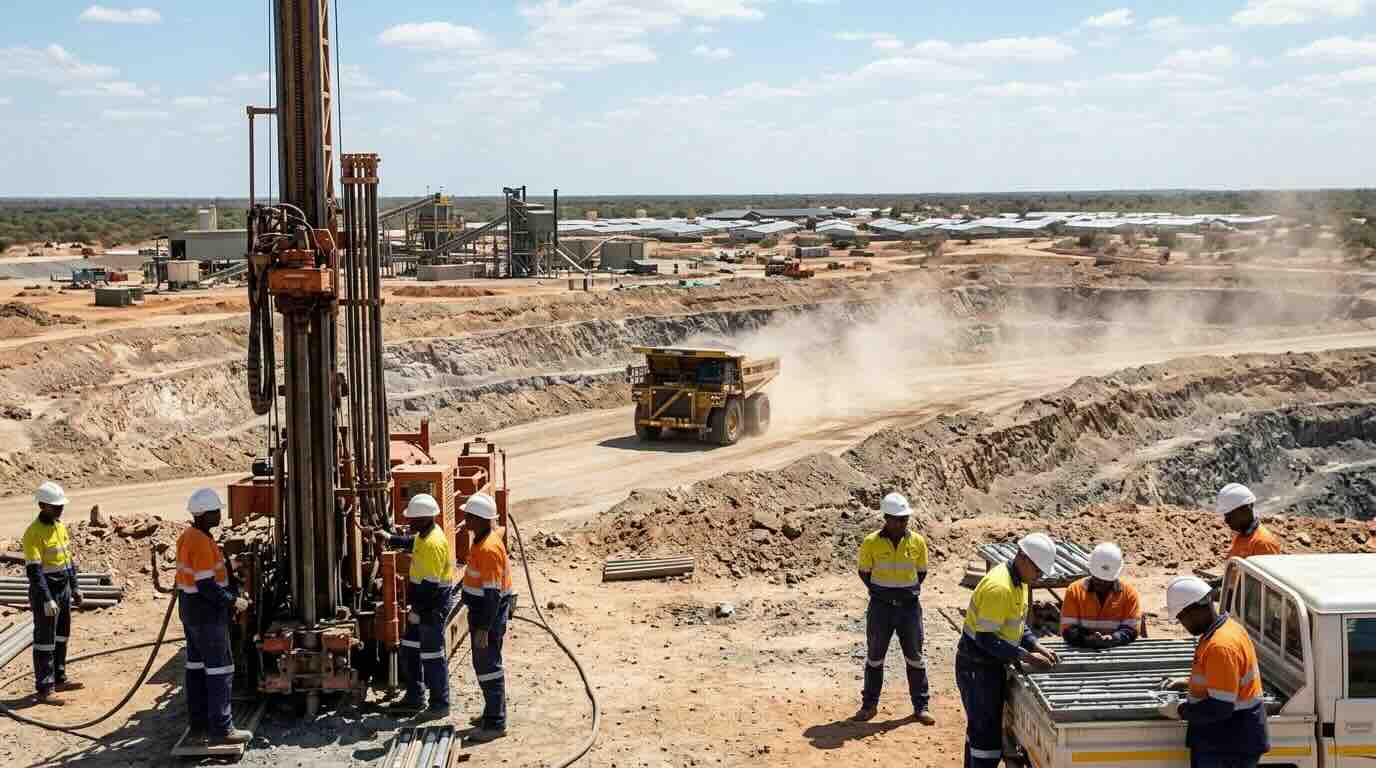
Motheo is particularly exposed to diesel prices because of its open-pit mining activities. Sandfire is addressing this through a planned 21MW solar facility in Botswana, alongside a 33MW facility at MATSA in Spain. Successful commissioning could reduce exposure to energy-price volatility, although the actual savings remain to be demonstrated.
What the company is doing now
Sandfire is pursuing growth through exploration around its established operations and longer-term development assets. At La Juliana, follow-up drilling has extended high-grade massive sulphide mineralisation across approximately 160 metres of strike, around 700 metres from existing MATSA underground development.
The company is accelerating drilling and concept studies to establish the deposit's scale and economic potential. Meanwhile, its 130km drilling programme at the Kalkaroo copper-gold project in South Australia is progressing towards a pre-feasibility study expected in the second half of FY28.
These initiatives could replenish reserves and extend mine life, but neither represents a proven addition to economically recoverable reserves yet.
Insight: Is Sandfire's growth opportunity already reflected in its valuation?
We view Sandfire as a well-established copper producer with credible operating assets, solid cash generation and opportunities to extend its resource base. Its balance sheet is a clear strength, but the investment case depends on more than strong quarterly earnings. At a share price of approximately A$19.18 on 26 October, its market capitalisation was about A$9 billion, with a trailing price-to-earnings ratio of roughly 17 times. That is not an obviously distressed valuation. We would want sustained cash generation and successful exploration conversion to justify stronger expectations.

 Mark Elzayed•






