Janus Electric Holdings Ltd (ASX: JNS) is entering a critical phase as a growing North American order book begins to translate into vehicle deliveries, supported by fresh financing and a strategic investment from battery supplier Electrovaya. The challenge is no longer simply proving its electric truck conversion technology works, but demonstrating that it can fulfil customer commitments, generate recurring revenue and fund expansion without placing excessive pressure on its balance sheet.
Key numbers
- A$64.6 million: Gross contract value of Janus Electric's North American order book, covering 124 trucks.
- A$3.1 million: Repeat order from US customer King Fio Trucking for six electric truck conversions and battery sets.
- A$11 million: Financing facilities secured from Commonwealth Bank of Australia.
- A$4.8 million: FY2026 revenue and other income, up 53% year on year.
- A$7.0 million: Net cash used in operating activities during FY2026.
North American orders raise the stakes
The latest commercial developments provide evidence that Janus is progressing beyond its initial market-entry phase. On 27 October, the company announced a A$3.1 million repeat order from California-based King Fio Trucking for six Class 8 electric truck conversions and six swappable battery sets.
The order doubles King Fio's commitment to 12 trucks. Importantly, the additional vehicles will use charging and battery-swapping infrastructure already included in the original agreement, potentially allowing Janus to expand deployments without requiring equivalent additional infrastructure expenditure.
The order takes the North American order book to 124 trucks, with a gross contract value of approximately A$64.6 million. That creates a substantial potential revenue opportunity for a business that generated only A$2.17 million in sales revenue during FY2026.
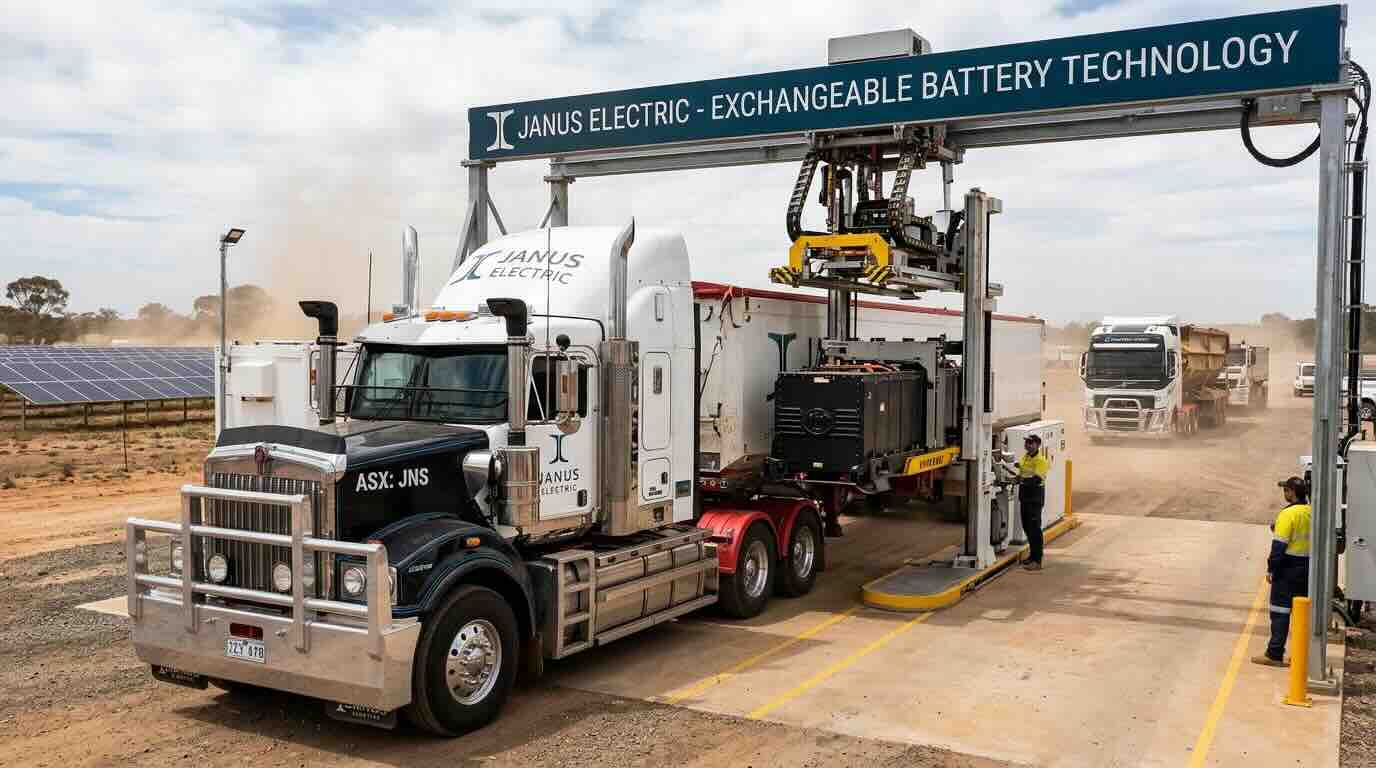
Janus converts conventional heavy vehicles to electric power and uses interchangeable battery systems designed to reduce charging downtime. Its commercial model can also generate subscription and usage fees, providing an opportunity to build recurring revenue as more vehicles enter service.
However, an order book is not the same as recognised revenue. Delivery schedules, customer funding, production capacity and the ability to fulfil contracts efficiently will determine how much of that headline value reaches the accounts.
Fresh funding supports expansion, but execution remains critical
On 23 October, Janus secured A$11 million in Commonwealth Bank facilities, comprising A$10 million in trade finance for working capital and A$1 million in asset finance for equipment.
The facilities should help address the mismatch between upfront production costs and revenue received as vehicles are delivered. That distinction matters because rapid expansion can consume cash even when customer demand is genuine.
On 28 October, battery supplier Electrovaya also announced a proposed A$2 million strategic investment in Janus. The transaction is intended to strengthen their existing supply relationship and provide additional working capital. Completion conditions and the accompanying warrant arrangements remain relevant to assessing the full financing implications.
Janus has placed initial battery-system purchase orders worth approximately A$37.5 million to support its North American truck commitments, with deliveries already under way. This highlights both the scale of its expansion plans and the importance of coordinating component supply with customer deliveries.
Revenue is growing, but losses and cash burn remain substantial
Janus generated A$4.81 million in revenue and other income in FY2026, up 53% from A$3.14 million a year earlier. Sales revenue increased approximately 28% to A$2.17 million, indicating that the business is beginning to establish a larger commercial base.
Yet its statutory net loss widened slightly to A$9.11 million from A$8.91 million. Adjusted EBITDA, which measures operating performance before interest, tax, depreciation and amortisation, deteriorated to a loss of A$6.83 million from A$4.58 million. The company attributed much of the increase to non-recurring listing and legacy costs, although the underlying business still requires substantial investment.
Operating cash outflow reached A$6.97 million, compared with A$6.58 million in FY2025. Cash reserves stood at A$2.03 million at 30 June 2026, down from A$4.05 million a year earlier.
The balance sheet therefore remains a central consideration. The new facilities and proposed strategic investment provide support, but they do not eliminate the need to manage working capital carefully as production scales.
Insight: Can Janus convert its order book into a sustainable business?
We see the opportunity in Janus's transition from domestic demonstrations to larger international deployments, particularly as repeat orders and battery deliveries provide evidence of commercial progress. However, the A$64.6 million North American order book must be judged against FY2026 sales revenue of A$2.17 million and operating cash outflow of A$6.97 million. The decisive test is whether deliveries generate sufficient revenue and margins to reduce funding dependence. The next milestone is the conversion of contracted orders into operational trucks and customer receipts.
The verdict: Delivery performance will determine the next phase
Janus has established a credible commercial opportunity through customer orders, financing arrangements and its Electrovaya relationship. The business now needs to demonstrate that its production capacity, supply chain and recurring-revenue model can support profitable growth.
Market participants should monitor vehicle deliveries, contract conversion, operating cash flow and the company's funding position. If revenue scales while cash burn moderates, the commercial case will strengthen. If delivery costs and working-capital demands continue to outpace receipts, the growing order book may prove more difficult to monetise than its headline value suggests.

 Mark Elzayed•






