Axel REE Limited (ASX: AXL) has achieved a significant metallurgical milestone at its Caladão Project in Brazil, producing its first high-grade mixed rare earth carbonate with the potential to simplify future processing and reduce development costs.
Announced on 27 October 2026, the breakthrough strengthens Axel's proposed in-situ recovery strategy. However, the critical question is whether promising laboratory results can translate into commercially viable production.
Key numbers
- 54.41% TREO: Total rare earth oxide content in Axel's first mixed rare earth carbonate.
- 97% recovery: Rare earth precipitation efficiency, increasing to 99% for magnet rare earth oxides.
- 264.6 million tonnes: Woolrich Mineral Resource, including 110.1 million tonnes classified as Indicated.
- 708.6 million tonnes: Caladão's combined rare earth Mineral Resource.
- $5.73 million: Cash reserves at 30 June 2026, against a full-year net loss of $3.64 million.
A processing breakthrough could change Woolrich's economics
The latest results represent more than another exploration milestone.
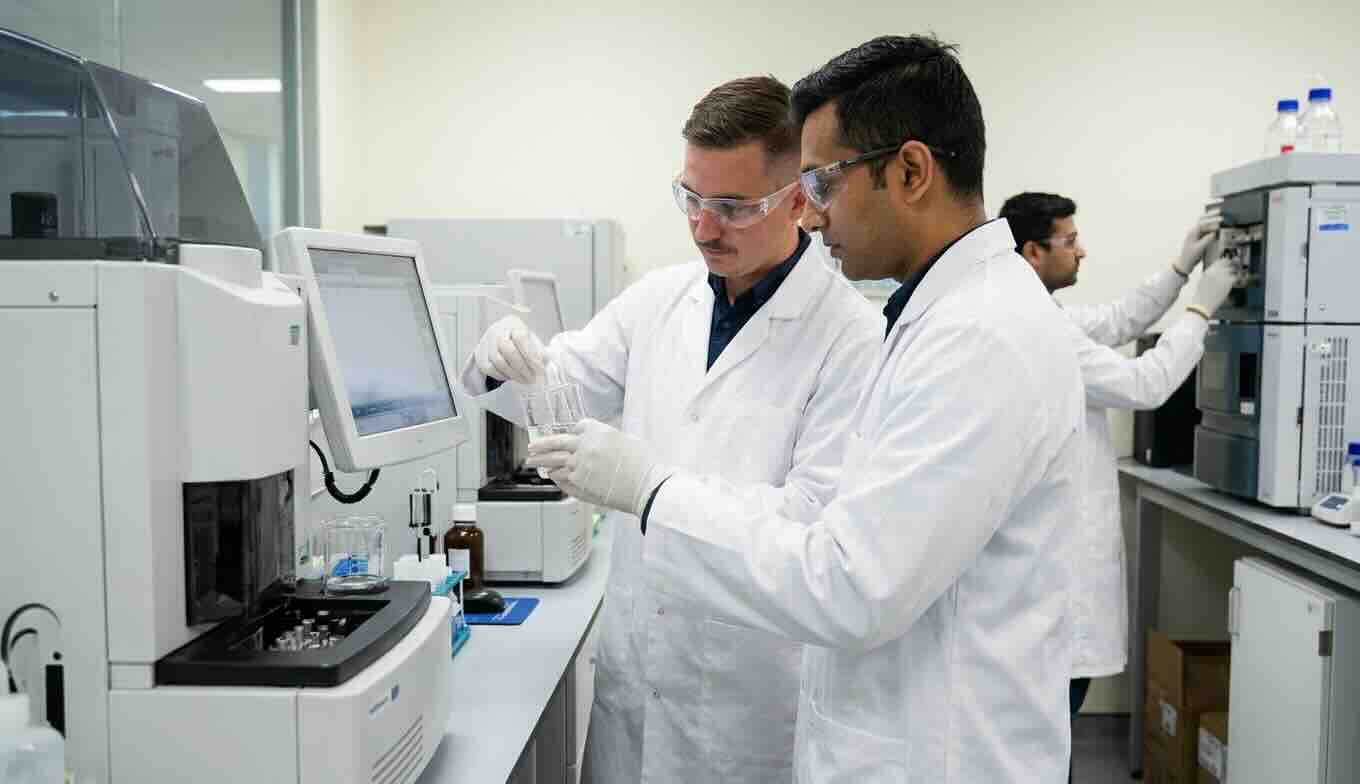
Independent laboratory testing successfully converted rare earth-bearing solutions into a mixed rare earth carbonate containing 54.41% total rare earth oxides.
Importantly, the product contained 35.9% magnet rare earth oxides within its rare earth basket, including commercially valuable neodymium, praseodymium, dysprosium and terbium.
These elements are essential ingredients in permanent magnets used across electric vehicles, wind turbines and advanced industrial equipment.
The strongest commercial implication, however, lies in processing efficiency.
Axel achieved its precipitation results without a dedicated impurity-removal stage in the laboratory circuit.
Removing this step from a commercial processing flowsheet could potentially reduce equipment requirements, reagent consumption and operating complexity.
That advantage remains unproven at scale, but it provides a credible technical basis for further development.
The laboratory test produced just 15.11 grams of dried carbonate, demonstrating process feasibility rather than commercial production capability.
A larger resource strengthens the development opportunity
Axel's processing milestone follows a substantial expansion of its Brazilian mineral resources.
In September 2026, the company upgraded Woolrich's Mineral Resource to 264.6 million tonnes grading 1,101 parts per million TREO, more than doubling its previous estimate.
The upgrade included 110.1 million tonnes of Indicated Resources, representing approximately 42% of Woolrich's total.
Across Caladão, rare earth resources increased 24% to 708.6 million tonnes, while gallium resources expanded 31% to 575.7 million tonnes.
These developments strengthen geological confidence and provide a larger potential resource base for future development studies.
Nevertheless, Mineral Resources are not Ore Reserves, and their size does not establish profitability.
Recoverable volumes, processing costs, environmental approvals and development expenditure will ultimately determine the project's economic potential.
Cash reserves and development costs remain critical
Axel remains an exploration and development-stage company without established operating revenue.
Its financial year ended 30 June 2026 produced a net loss of $3.64 million, alongside closing cash reserves of $5.73 million.
While the cash balance provides funding flexibility, it should not be interpreted as sufficient capital for commercial development.
Upcoming field trials, engineering studies and environmental assessments will require further expenditure.
Additional financing could become necessary as development progresses, potentially introducing shareholder dilution.
Traditional earnings multiples are therefore unsuitable for assessing Axel's valuation.
We believe a more meaningful assessment will eventually depend on risk-adjusted project economics, including recoverable rare earth volumes, operating costs, initial capital expenditure and sustainable production capacity.
Without these inputs, any definitive conclusion that Axel is undervalued would be premature.
Can laboratory success survive real-world conditions?
Axel's next major challenge is demonstrating that its recovery process works consistently outside the laboratory.
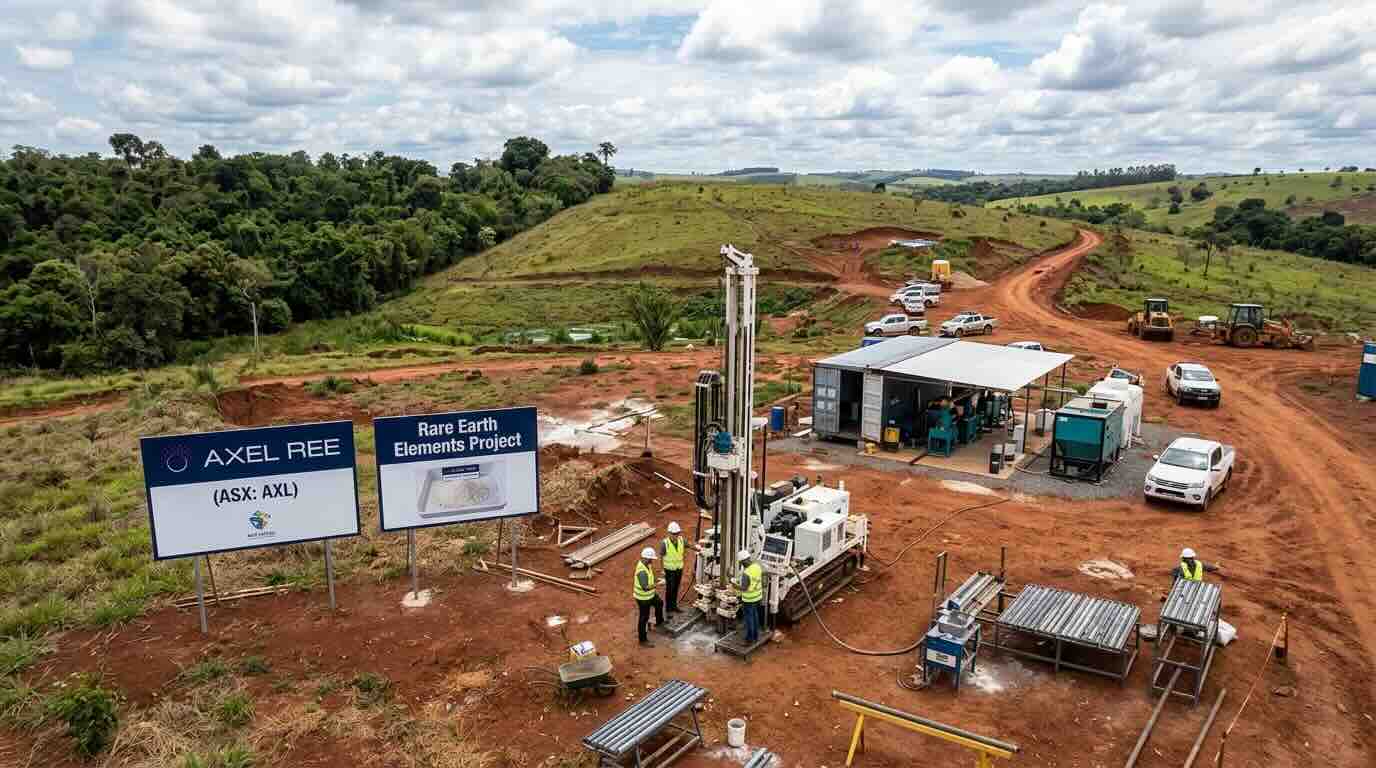
The company is preparing controlled in-situ recovery field testing at Woolrich, supported by hydrogeological, geotechnical and environmental assessments.
Successful testing would provide important evidence about solution recovery, reagent consumption, impurity behaviour and overall extraction efficiency.
Meanwhile, Axel is accelerating exploration at its separate Caldas Project following renewed corporate interest in Brazil's Poços de Caldas rare earth district.
Although Caldas provides additional exploration potential, Woolrich remains the more immediate development priority.
Insight: Axel's real opportunity lies in simplifying rare earth production
What stands out to us is the potential relationship between Axel's expanding resource base and its emerging processing advantages. Achieving 97% rare earth precipitation without a dedicated impurity-removal stage suggests a potentially less complex development pathway, but precipitation efficiency is not equivalent to overall mineral recovery. The company's opportunity becomes substantially more credible if controlled field testing confirms consistent recoveries, manageable reagent consumption and competitive operating costs. The next decisive measure will be independently demonstrated field-scale recovery efficiency.


 Mark Elzayed•