1414 Degrees (ASX: 14D) is accelerating its ambitions in artificial intelligence infrastructure, with further progress on a proposed 1-gigawatt data centre development at its Aurora Energy Precinct in South Australia.
The company's 29 October 2026 quarterly update highlights expanding renewable energy infrastructure opportunities, improved SiNTL battery technology and new manufacturing partnerships.
However, with annual losses widening and major projects still awaiting binding commercial commitments, the question is whether its development pipeline can translate into sustainable revenue.
Key numbers
- 1GW: Proposed staged AI data centre development capacity at Aurora, subject to commercial agreements and approvals.
- 140MW: Planned first-stage battery energy storage system, alongside a proposed 70MW solar development.
- 550mAh/g: Demonstrated SiNTL battery material capacity across more than 640 charge-discharge cycles.
- $1 million: October 2026 programme to accelerate SiNTL material production and external evaluation.
- $6.24 million: FY2026 net loss, compared with $3.34 million in FY2025.
Aurora's 1GW data centre proposal creates a major growth opportunity
The latest quarterly update reinforces Aurora's importance to 1414 Degrees' long-term strategy.
The company previously announced a Heads of Agreement in July with an Australian data centre operator covering the proposed staged development of up to 1GW of artificial intelligence infrastructure.
The arrangement provides exclusivity over an initial 40-hectare development area while both parties negotiate commercial terms, infrastructure requirements and development arrangements.
However, the agreement remains preliminary and does not establish a binding construction commitment, contracted revenue or a completed financing package.
Aurora covers approximately 16 square kilometres near Port Augusta, providing substantial land for renewable energy and digital infrastructure development.
Following completion of its acquisition of the remaining interest in SiliconAurora in October, 1414 Degrees now controls the precinct through its wholly owned subsidiary.
This simplifies ownership arrangements and could strengthen its negotiating position with infrastructure partners.
Nevertheless, the project's commercial value depends on securing customers, electricity supply, grid connections and construction financing.
Solar and battery storage offer a staged development pathway
Rather than attempting the entire data centre development immediately, 1414 Degrees is pursuing a staged energy infrastructure strategy.
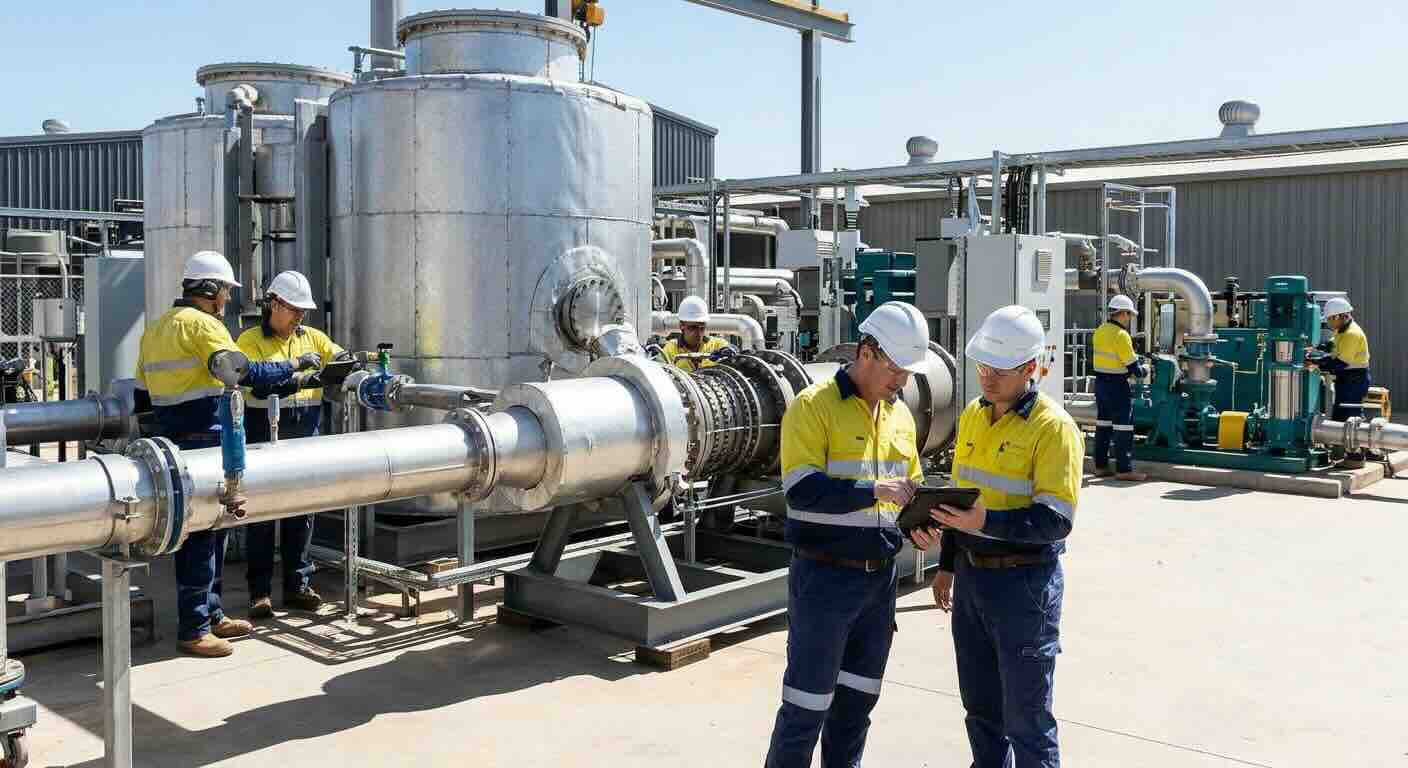
Its initial development plans include a 140MW battery energy storage system and a 70MW solar photovoltaic project.
On 22 October, the company announced a purchase order for 5B Maverick prefabricated solar technology to support Aurora's initial solar development.
The equipment order relates to a proposed installation covering approximately 42 hectares.
This represents progress towards establishing renewable energy infrastructure, but it should not be interpreted as confirmation that the full 70MW project has been financed or constructed.
1414 Degrees is also progressing a connection to the neighbouring 33kV distribution network.
Management believes this could provide a faster and less capital-intensive pathway towards initial commercial operations.
The company is seeking infrastructure partners to support development and financing.
Successful partnerships could reduce its direct capital requirements while creating opportunities for future energy-related revenue.
However, construction costs, grid approvals, commercial electricity agreements and partner commitments remain significant uncertainties.
SiNTL battery technology reaches another performance milestone
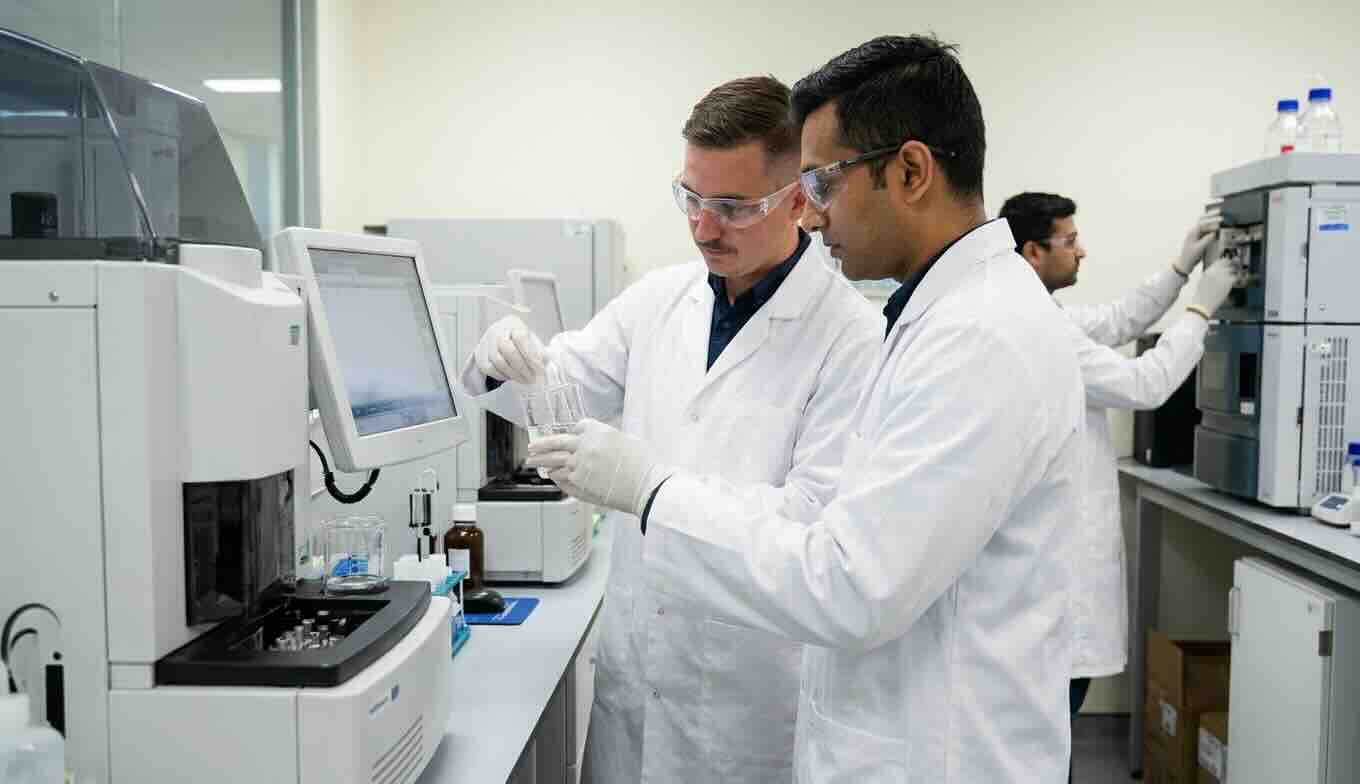
Beyond Aurora, 1414 Degrees continues developing its silicon-based SiNTL battery material.
The latest quarterly update reported a formulation delivering approximately 550 milliamp-hours per gram after more than 640 charge-discharge cycles while maintaining acceptable capacity.
Initial testing of optimised formulations has also reached approximately 600mAh/g.
These results suggest potential energy storage advantages over conventional graphite anodes, particularly in applications where battery weight and energy density are important.
Potential markets include drones, satellites, aerospace systems and other specialised energy storage applications.
In October, the company announced a $1 million development programme designed to expand SiNTL material production and support external battery evaluation during 2027.
The programme is intended to accelerate the transition from laboratory research towards independent testing and potential commercial manufacturing.
However, laboratory performance does not establish industrial-scale viability.
Manufacturing consistency, battery safety, cycle life, production costs and independent customer qualification will determine whether SiNTL can generate meaningful commercial sales.
South Korean manufacturing partnership supports commercialisation
1414 Degrees has also established a manufacturing collaboration with South Korean battery manufacturer JR Energy Solution.
The arrangement creates a potential pathway for SiNTL material to progress into electrode manufacturing and full-cell battery testing.
This is important because commercial battery applications require more than promising anode-material performance.
Battery manufacturers must demonstrate that the technology can operate reliably when integrated with other cell components under realistic conditions.
The collaboration could help address the technical challenges associated with scaling production and evaluating performance.
However, commercial manufacturing and supply agreements remain dependent on successful testing, customer qualification and future contractual arrangements.
The company has also pursued evaluation opportunities involving drone and satellite manufacturers.
These partnerships broaden potential applications for SiNTL, although they do not yet establish recurring commercial revenue.
Financial losses highlight the need for disciplined execution
1414 Degrees remains a development-stage company without established commercial revenue from its major growth initiatives.
Its FY2026 net loss widened to approximately $6.24 million from $3.34 million in FY2025.
Annual operating cash outflows increased from $2.47 million to approximately $3.88 million.
The company's June-quarter Appendix 4C reported cash and cash equivalents of approximately $1.758 million at 30 June 2026.
During 2026, 1414 Degrees secured $8.45 million in placement commitments, alongside subsequent proceeds from option exercises.
These financing activities have supported continued development across Aurora and SiNTL.
However, future option exercise proceeds should not be treated as guaranteed funding.
The September 2026 quarterly report provides a further financial reporting milestone, although its closing cash balance has not been independently verified for this analysis.
The company's FY2026 accounts also highlighted material uncertainty regarding its ability to continue operations without sufficient additional funding.
With negative earnings and unproven commercial cash flows, conventional earnings multiples provide limited valuation insight.
Funding requirements, technology validation, contractual revenue visibility and progress towards commercial operations remain more meaningful considerations.
SiPHyR adds another industrial energy opportunity
Alongside its battery materials and Aurora infrastructure projects, 1414 Degrees continues developing its SiPHyR thermal energy storage technology.
The system incorporates its proprietary SiBrick technology and is designed to provide industrial heat solutions that could reduce dependence on conventional fossil fuels.
The company is progressing prototype construction and assessing potential industrial applications.
Management has also identified interest from industrial customers that could provide opportunities for future demonstrations.
However, commercialisation of its heat-as-a-service model has progressed more slowly than anticipated.
Industrial customers remain cautious about committing to decarbonisation investments, particularly where project economics and implementation timelines remain uncertain.
SiPHyR offers another potential revenue pathway, but further technical validation and commercial agreements will be necessary.
Insight: Aurora's first commercial stage matters more than its 1GW ambition
What stands out to us is the contrast between 1414 Degrees' substantial development ambitions and the financial resources required to commercialise them.
The proposed 1GW data centre could position Aurora within the expanding artificial intelligence infrastructure market, but its value remains dependent on binding agreements and credible development financing.
We believe the initial 70MW solar and 140MW battery storage projects provide a more practical test of the company's ability to establish commercial operations.
Meanwhile, SiNTL's improving battery performance and South Korean manufacturing collaboration offer potential technology advantages, although commercial-scale production remains unproven.
The market may be overlooking the importance of securing experienced infrastructure partners capable of funding Aurora's initial development stages.
Our assessment would strengthen if 1414 Degrees converted preliminary arrangements into binding contracts, demonstrated independently verified battery performance and established a credible pathway towards recurring revenue.

 Mark Elzayed•