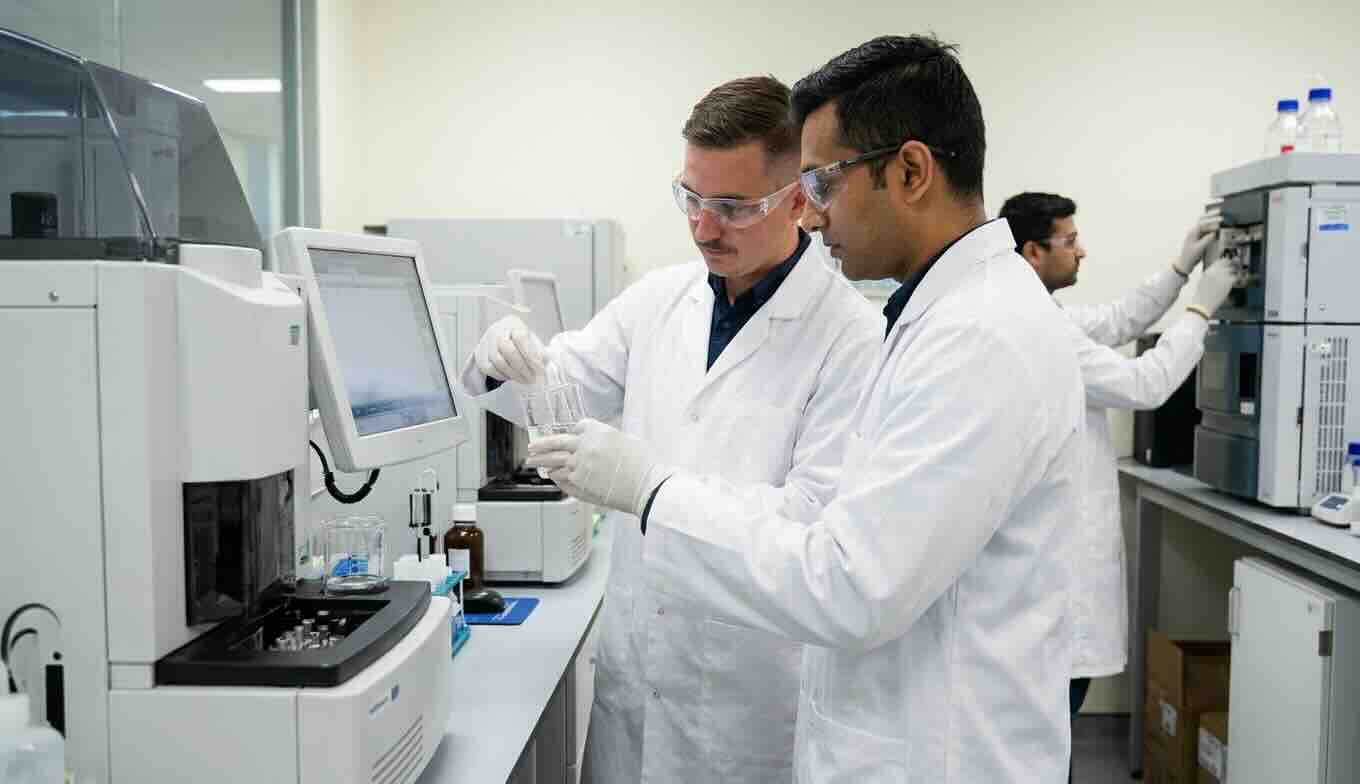
Arafura Rare Earths Limited (ASX: ARU) has commenced construction activities at its Nolans Rare Earths Project in the Northern Territory, marking a major transition from project development towards establishing an integrated Australian rare earths operation.
The company's 30 October 2026 quarterly activities report confirmed cash and term deposits of approximately $885 million at 30 September, alongside progress on construction, financing arrangements and customer agreements.
With substantial government-backed financial support and a planned annual production capacity of approximately 4,440 tonnes of neodymium-praseodymium (NdPr) oxide, Nolans has the potential to become an important supplier to global permanent magnet manufacturers.
However, first production is not expected until 2029, and the project must navigate substantial construction expenditure, processing challenges and commodity-price uncertainty before generating sustainable operating cash flow.
The central question is whether Arafura can convert its strong financial backing and strategic market position into commercially competitive rare earths production.
Key numbers
- $885 million: Cash and term deposits held at 30 September 2026.
- More than US$1.6 billion: Reported equity and debt commitments supporting the Nolans development.
- Approximately US$1.69 billion: Construction funding bridge outlined in May 2026, compared with an earlier broader funding framework of approximately US$1.9 billion including contingency support.
- 4,440 tonnes: Planned annual NdPr oxide production capacity at Nolans.
- 2029: Target year for first production, following the final investment decision in May 2026 and official groundbreaking in October.
Construction begins at Nolans following final investment decision
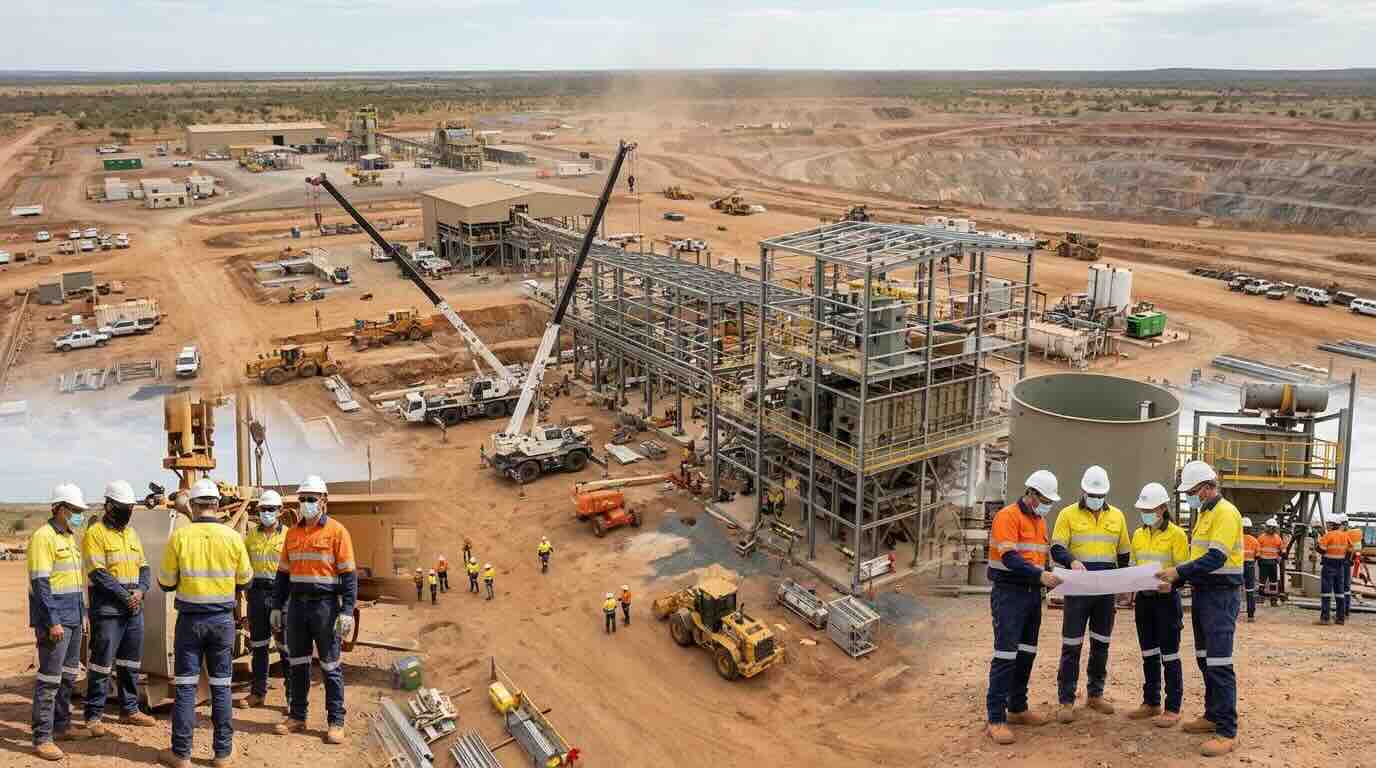
Arafura's September-quarter activities report confirmed that construction activities had commenced at the Nolans Rare Earths Project.
The development follows the company's final investment decision in May 2026, an important milestone in advancing the project towards commercial production.
An official groundbreaking ceremony was held on 8 October, with the company announcing the event on 9 October.
Early development activities have included site access preparation, mobilisation and initial construction work.
These activities establish the foundations for the larger engineering, procurement and construction programme.
The commencement of construction represents a significant change in Arafura's development profile.
Rather than focusing primarily on feasibility studies, financing discussions and commercial agreements, the company must now manage physical project delivery.
This introduces new priorities, including contractor performance, construction scheduling, equipment procurement and expenditure control.
For shareholders, the transition creates opportunities for measurable development progress but also increases exposure to execution risk.
Successful construction will depend on maintaining sufficient liquidity, coordinating contractors and completing technical infrastructure within the approved capital programme.
Nolans targets integrated rare earths production
Nolans is designed to become an integrated rare earths mining and processing operation.
The project aims to extract rare earth-bearing material and convert it into separated rare earth oxides, including NdPr.
NdPr is a critical material used in high-performance permanent magnets.
These magnets support applications including electric vehicles, wind turbines, industrial equipment and advanced manufacturing.
Arafura's planned annual NdPr oxide production capacity is approximately 4,440 tonnes.
According to Australian government trade information, this could represent around 4% of estimated global NdPr oxide demand.
However, the figure reflects planned production capacity rather than output already achieved.
Actual annual production will depend on successful construction, commissioning, metallurgical performance and operating reliability.
The integrated processing model is commercially significant because rare earth separation and refining are specialised activities concentrated within a relatively small number of international supply chains.
By developing processing capabilities alongside mining operations, Arafura aims to supply separated oxide products rather than relying entirely on third-party processing facilities.
This could strengthen its commercial position with customers seeking alternative rare earth supply arrangements.
Nevertheless, integration also increases project complexity and capital requirements.
The company must demonstrate that its processing technology can achieve reliable recovery, consistent product quality and competitive operating costs.
Sovereign-backed financing strengthens the development foundation
Arafura has secured substantial financial support from government-backed institutions and strategic funding partners.
The company has reported more than US$1.6 billion in equity and debt commitments associated with the Nolans development.
These arrangements include support from Australian and international institutions seeking to strengthen critical minerals supply chains.
Government-backed financing provides an important advantage for a capital-intensive project requiring substantial expenditure before commercial production begins.
Such commitments may reduce uncertainty around funding availability and support the company's ability to undertake major construction activities.
However, financing commitments should not be confused with unrestricted cash already received.
Debt facilities may remain subject to documentation, drawdown requirements and other conditions.
Similarly, equity commitments may be subject to settlement arrangements and applicable transaction conditions.
For investors, the distinction is important because construction expenditure will require ongoing access to available funding.
The company must also satisfy its financing obligations while progressing towards production.
The presence of government support strengthens the project's financial foundation but does not eliminate construction, operational or commercial risks.
Funding framework requires careful interpretation
Nolans has been associated with several funding figures as its development financing progressed.
Earlier company disclosures referred to approximately US$1.9 billion in total funding sources, including financing costs, contingencies and completion-support arrangements.
Arafura's May 2026 funding presentation outlined a revised construction funding bridge of approximately US$1.69 billion.
These figures describe different components and stages of the financing framework and should not be treated as interchangeable estimates of the project's construction cost.
Contingency and completion-support facilities may not be expected to be drawn under the base development scenario.
Similarly, committed funding arrangements do not necessarily represent cash immediately available for expenditure.
The company's financing position must therefore be assessed through the relationship between available liquidity, committed facilities, construction obligations and conditions attached to future drawdowns.
For shareholders, the central issue is whether Arafura has sufficient accessible funding to complete construction and commissioning without requiring material additional capital.
Any increase in construction expenditure, financing expenses or development delays could place pressure on the existing funding structure.
Consequently, future quarterly updates should be examined for changes in project costs, financing conditions and capital requirements.
Cash and term deposits reach $885 million
At 30 September 2026, Arafura reported approximately $885 million in cash and term deposits.
This provides a substantial liquidity position as the company enters its construction phase.
However, the balance should not automatically be interpreted as entirely unrestricted cash available for discretionary expenditure.
Term deposits may be subject to maturity arrangements, while portions of project funding may be associated with specific development requirements.
The cash position also forms part of the company's broader financing arrangements.
It should therefore not be added to reported equity and debt commitments without considering potential overlap.
The distinction matters because funds already received may be included within the company's total committed financing package.
With first production targeted for 2029, Arafura faces several years of expenditure before the project is expected to generate meaningful operating revenue.
Construction, engineering, procurement, staffing and commissioning activities will consume capital during that period.
For shareholders, the important financial measure will be whether expenditure remains consistent with the approved development programme.
Future cash balances should be assessed alongside construction progress and the timing of additional financing drawdowns.
A declining cash balance during construction is not necessarily evidence of financial deterioration if expenditure remains within budget and contributes to planned development milestones.
However, unexpected cost escalation or slower construction progress would increase funding risk.
Cornerstone equity commitments reinforce international support
Arafura's financing package includes approximately $230 million in cornerstone equity commitments from sovereign-backed institutions.
Germany's KfW, acting on behalf of the German Raw Materials Fund, committed €50 million, equivalent to approximately A$84 million using the referenced transaction conversion.
Export Finance Australia committed US$100 million, equivalent to approximately A$146 million.
Together, these commitments represent approximately A$230 million in indicative Australian-dollar terms.
The amounts are currency-converted approximations, and their Australian-dollar value may vary with exchange rates.
These commitments were established earlier in 2026 and should not be interpreted as entirely new funding received during the September quarter.
The participation of institutions associated with Australia and Germany demonstrates the strategic interest in establishing alternative rare earth supply chains.
For governments and manufacturers, a reliable source of separated rare earth oxides could support supply security and industrial diversification.
However, strategic backing does not guarantee commercial profitability.
Arafura must still demonstrate that the completed operation can produce rare earth products at costs and quality levels that support sustainable margins.
Traxys offtake agreement strengthens customer visibility
Arafura has also continued progressing its commercial relationships with international customers.
On 12 October 2026, the company announced a binding offtake agreement with Traxys North America.
The agreement provides for the supply of up to 850 tonnes of NdPr oxide annually over an initial five-year period.
It also includes extension options and pricing arrangements linked to an independent international seaborne index.
The agreement expands Arafura's prospective customer network and provides additional visibility over potential demand for Nolans production.
However, the contracted maximum annual volume should not be treated as guaranteed realised sales.
Actual deliveries will depend on production availability, contractual requirements and successful project commissioning.
The use of index-linked pricing also means future revenue will remain exposed to changes in rare earth market prices.
For shareholders, the agreement supports confidence in the project's commercial relevance, but it does not establish future earnings margins.
The company must still demonstrate that production costs can remain competitive under different commodity-price conditions.
International customer relationships support supply-chain diversification
Arafura's broader commercial arrangements include international customers and trading partners across Europe, Asia and North America.
The company's customer network includes Hyundai, Kia, Siemens Gamesa and Traxys.
These relationships reflect demand from industries that rely on rare earth permanent magnets.
Automotive manufacturers use NdPr-based magnets in selected electric vehicle applications.
Wind turbine manufacturers also use permanent magnets in certain generator systems.
By establishing supply agreements with customers across different industries and regions, Arafura aims to diversify potential demand for Nolans products.
This may reduce dependence on a single customer or geographic market.
However, the presence of multiple offtake agreements does not eliminate commodity-price exposure.
The financial value of future sales will depend on pricing mechanisms, delivery volumes and the company's ability to produce materials to customer specifications.
For investors, binding agreements provide stronger evidence of market interest than non-binding discussions.
Nevertheless, their ultimate value will be determined by successful project delivery and the margins achieved on actual sales.
Construction execution becomes the primary operational risk
The transition into construction changes the principal risks facing Arafura.
Earlier development stages focused heavily on obtaining financing, completing technical studies and securing commercial agreements.
The company's immediate priorities now involve delivering a complex integrated mining and processing facility.
This requires coordination across engineering, construction, procurement and operational preparation.
Major equipment must be ordered and installed according to schedule.
Site infrastructure must be completed to support processing operations.
Contractors must also deliver work within agreed budgets and technical requirements.
Delays in critical equipment or infrastructure could affect the broader construction timetable.
Cost escalation would place pressure on the project's financing requirements.
Arafura must also ensure that its planned processing facilities can operate reliably once construction is completed.
The integrated nature of Nolans creates potential commercial advantages but also increases technical complexity.
For shareholders, regular updates on procurement, engineering completion, construction expenditure and commissioning preparation will be particularly important.
Rare earth processing performance will determine competitiveness
Nolans is designed to produce separated rare earth oxides rather than simply mining and exporting mineral concentrate.
This provides a potential strategic advantage because separation and refining capabilities are important components of the global rare earth supply chain.
However, these activities involve complex processing requirements.
The company must achieve reliable recovery of valuable rare earth elements while managing reagent consumption, energy requirements and operating costs.
Product quality must also meet customer specifications.
Any difficulties in processing performance could reduce output, increase costs or delay deliveries.
Even if construction is completed according to schedule, the operation must undergo commissioning and ramp-up before achieving sustained production.
This means the first-production milestone will not automatically establish full commercial capacity.
For shareholders, the key operating measures will include recovery efficiency, plant reliability, product quality, production costs and the pace of ramp-up.
These factors will determine whether Nolans can compete economically with established international suppliers.
NdPr pricing remains a major variable in project returns
Arafura's commercial prospects are closely linked to future demand and pricing for separated rare earth oxides.
NdPr is used in permanent magnets that support electric vehicles, renewable energy systems and industrial technologies.
Demand growth could create opportunities for suppliers with reliable production and established customer relationships.
However, rare earth prices can be volatile.
Changes in global production, refining capacity, industrial demand and supply-chain policy may affect market conditions.
Arafura's offtake arrangements provide potential sales channels, but index-linked pricing can expose future revenue to market fluctuations.
Consequently, strong customer demand does not necessarily guarantee attractive profit margins.
The project must achieve operating costs that remain commercially competitive across different pricing environments.
This is particularly important given the substantial capital required to develop Nolans.
For investors, risk-adjusted project economics provide a more meaningful framework than conventional earnings multiples while the company remains in construction.
Future financial performance will depend on production volumes, realised prices, operating costs and financing obligations.
Governance transition accompanies construction commencement
Arafura's October activities also included the appointment of Ian Murray as chair.
The governance transition comes as the company enters a more demanding stage of project execution.
Large-scale construction projects require effective oversight of capital allocation, contractor management, financing obligations and operational risk.
Board experience in financial management and major project delivery can therefore be relevant to the company's development strategy.
However, governance appointments should be assessed alongside actual project performance.
The company's success will ultimately depend on maintaining financial discipline, meeting technical milestones and delivering the integrated operation within an acceptable cost framework.
For shareholders, transparent reporting on construction progress, expenditure and potential delays will remain essential.
Insight: Government backing reduces funding uncertainty, but profitability remains the decisive test
What stands out to us is Arafura's progression from a long-development rare earths project into an integrated mining and processing operation supported by substantial international financing and binding customer agreements.
The company's planned production of approximately 4,440 tonnes of NdPr oxide annually could establish Nolans as a meaningful alternative source of separated rare earth materials for global manufacturers.
The $885 million cash and term deposit position provides substantial development liquidity, while sovereign-backed financing commitments and commercial agreements strengthen the project's financial foundation.
However, the scale of that support should not be confused with guaranteed profitability.
Nolans remains exposed to construction costs, processing performance, financing conditions and future rare earth prices.
We believe the integrated ore-to-oxide model offers a competitive advantage if Arafura can achieve reliable production and competitive operating costs.
However, first production is not expected until 2029, and substantial capital expenditure must occur before the project generates sustainable operating cash flow.
Our assessment would strengthen with evidence of construction progressing within budget, continued financing compliance and updated project economics demonstrating attractive returns under conservative NdPr pricing assumptions.
The decisive measure will be whether Arafura can convert strategic supply-chain importance and strong financial backing into a commercially competitive operation.

 Mark Elzayed•