Evion Group NL (ASX: EVG) has gained conditional access to more than 9,100 metres of historical drilling in Nevada, potentially offering a lower-cost route to identifying fluorspar mineralisation.
The opportunity could strengthen its US critical minerals portfolio. However, the proposed transaction carries financial commitments and could dilute Evion's ownership of its existing Carp Fluorspar Project.
The question is whether additional exploration potential justifies those concessions.
Key numbers
- 9,116.6 metres: Historical drilling across 63 holes at Blue Nose.
- 5,626 samples: Previously collected samples that have not been analysed for fluorine.
- 75%: Maximum interest Evion can earn in non-reserved minerals at Blue Nose, subject to conditions.
- US$1.5 million: Staged cash consideration over two years, alongside four million shares and a US$30,000 due diligence payment.
- $5.755 million: Cash held at 30 September 2026, following $1.072 million in quarterly net operating cash outflow.
The latest development
On 2 November 2026, Evion announced a binding option and joint venture agreement with Infrastructure Materials Corp covering the 40-claim Blue Nose property, approximately 1.2 kilometres northwest of Carp.
The key attraction is an existing geological database.
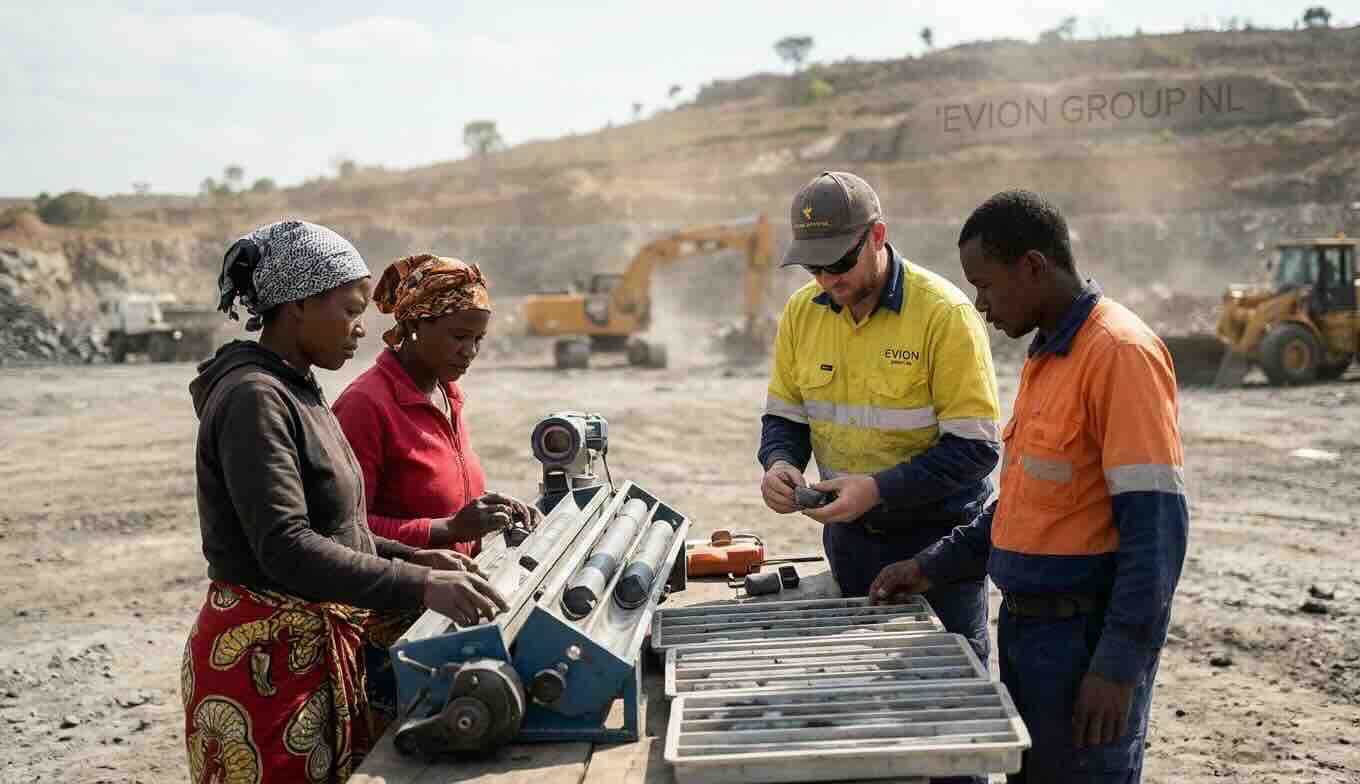
Historical drilling conducted between 2009 and 2010 produced thousands of samples that were never tested for fluorine, the element used to assess potential fluorspar mineralisation.
Analysing these samples could help Evion identify exploration targets without immediately financing extensive new drilling.
If completed, the transaction would expand its district position to approximately 829 hectares across 99 claims.
However, the agreement remains conditional on due diligence, regulatory requirements and third-party consents.
Importantly, Infrastructure Materials could also earn a 25% interest in Evion's Carp claims, free-carried through to a bankable feasibility study.
That concession creates a potential cost beyond the headline acquisition payments.
What stands out to us
Evion is effectively exchanging capital and potential project ownership for greater geological exposure.
The strategy offers advantages. Existing drilling information may reduce early exploration costs, while neighbouring properties could eventually support coordinated development.
However, historical samples cannot establish commercial viability without reliable assays, resource modelling and economic assessment.
Funding is another consideration.
Evion's $5.755 million September cash balance represented approximately 5.4 quarters of funding at its reported quarterly operating cash outflow of $1.072 million.
That historical calculation excludes potential acquisition payments, increased exploration spending and development commitments.
At the 2 November closing share price of 1.2 cents, approximately 871.7 million ordinary shares implied an equity value near $10.46 million.
Cash therefore represented a substantial proportion of market capitalisation, although it cannot be considered surplus while major projects require funding.
A reliable fair-value estimate remains difficult without established fluorspar resources and updated project economics.
What the company is doing now
Evion is advancing fluorspar exploration at Carp while progressing its Maniry Graphite Project in Madagascar.
At Carp, geological mapping, magnetic surveying and rock-chip sampling are helping establish future drilling priorities.
Maniry received mining permits in July 2026 and subsequently secured a binding graphite supply terms sheet covering approximately 10,000 tonnes annually for five years.
That represents around 26% of planned first-stage production.
Nevertheless, commercial production depends on financing, outstanding approvals and a final investment decision.
The project also faces a levy equivalent to 3% of initial capital expenditure associated with the mining permit process.
Insight: Is Evion Building Value or Stretching Its Capital Too Far?
We think Blue Nose presents a credible exploration opportunity because existing samples could establish useful geological evidence without substantial initial drilling costs. However, the proposed Carp ownership concession is significant, particularly while Evion's broader portfolio remains commercially unproven. Its cash position provides near-term flexibility, but advancing multiple projects could increase funding pressure and dilution risk. The company's valuation is difficult to assess using conventional earnings measures, making project economics and funding certainty essential. Strong fluorine assays would improve the exploration case, but commercially viable resources and development funding would ultimately determine whether additional acreage creates lasting value.

 Mark Elzayed•






