A smaller laboratory instrument could open another commercial market for Clever Culture Systems (ASX: CC5), extending its artificial intelligence technology beyond major pharmaceutical manufacturing facilities. The company's 3 November 2026 announcement, titled Funding Raised for Development of a New Benchtop Instrument, highlights its product expansion ambitions. However, with continuing losses and significant funding obligations, the bigger question is whether broader adoption can translate into sustainable cash generation.
Key numbers
- $4.619 million: FY26 revenue, excluding other income.
- $2.238 million: FY26 net loss after tax, compared with a $1.684 million profit in FY25.
- $1.405 million: Cash and cash equivalents at 30 September 2026.
- $3.9 million: Expected or committed cash inflows over the following two quarters, including amounts dependent on prospective sales.
- 37 instruments: Installed APAS base at 30 September 2026, compared with 26 a year earlier.
New Funding Supports a Broader Market Opportunity
Clever Culture Systems' latest announcement concerns funding for a new benchtop instrument, potentially extending its APAS technology to smaller microbiology laboratories.
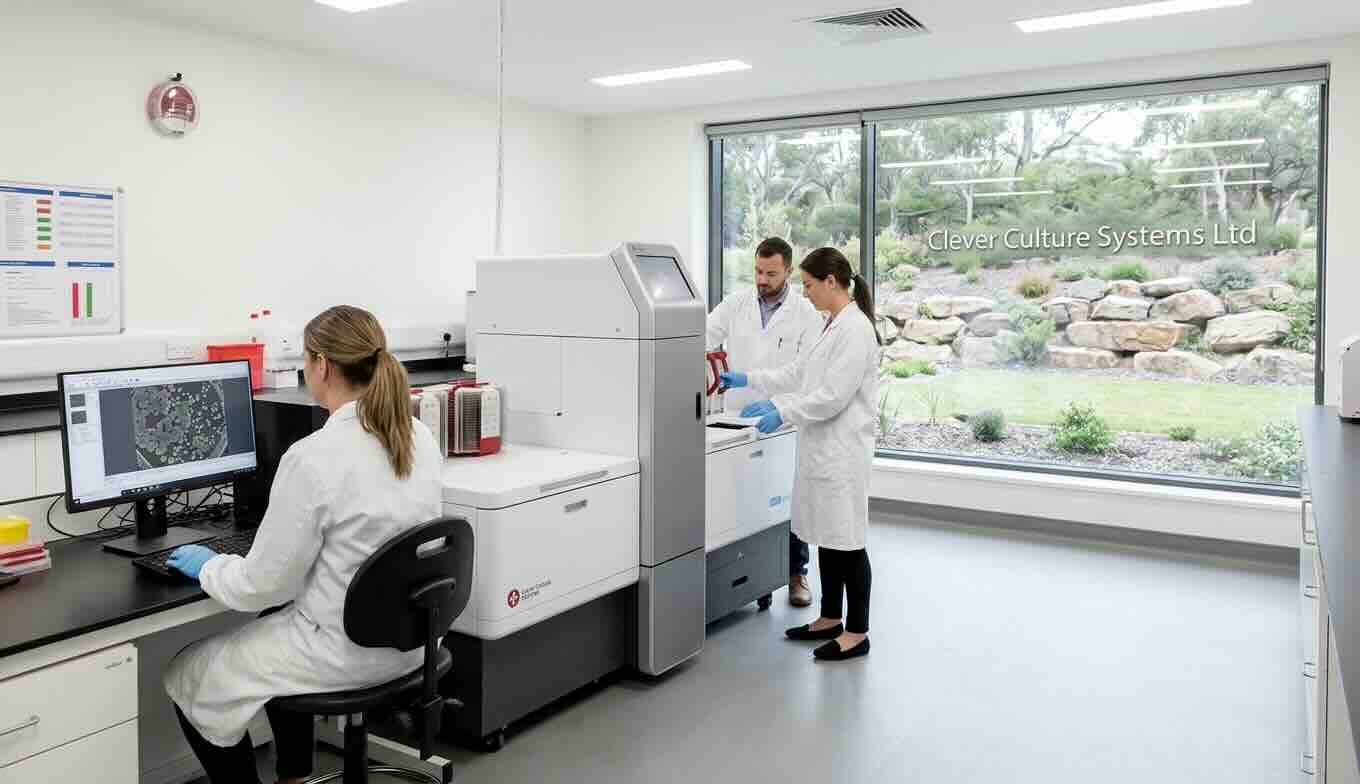
The company's existing APAS Independence system uses artificial intelligence to automate culture plate assessment, reducing repetitive manual work and supporting laboratory quality control.
A smaller instrument could address laboratories where the existing system's size, capacity or cost presents a barrier to adoption.
The benchtop concept is not entirely new. The company previously secured $1.5 million in government-backed matched funding for its APAS Compact development initiative in 2022.
Reusing existing intellectual property could reduce development complexity, although commercial success will depend on manufacturing costs, pricing, regulatory requirements and customer acceptance.
The financial terms of the 3 November announcement, including the funding structure and any associated dilution, have not been independently established.
What Stands Out to Us
The company's commercial progress provides a stronger foundation than its financial results currently suggest.
During the September quarter, Clever Culture Systems completed and invoiced three APAS Independence sales, including two to Novo Nordisk and one to AstraZeneca.
Its installed base increased to 37 instruments across clinical and pharmaceutical customers, demonstrating expanding adoption.
However, FY26 produced a $2.238 million net loss, while operating cash outflow reached $317,000 in the September quarter.
That quarterly figure benefited from $770,000 in government grants and tax incentives, meaning underlying cash requirements deserve attention.
The company also faces approximately $1.68 million in unsecured loan repayments, including interest, due on 31 December 2026.
Management intends to pursue an extension of up to 12 months, but this remains an important financing consideration.
Without confirmed funding terms and updated market capitalisation, we think a precise valuation judgement would be premature.
What the Company Is Doing Now
Clever Culture Systems is expanding deployment opportunities within existing pharmaceutical customers while developing additional sales channels.
Its October agreement with PSC Biotech provides sales coverage across the United States, Canada and Singapore.
Importantly, PSC Biotech will receive commissions on successful hardware sales, while Clever Culture Systems retains ongoing software and service revenue.
The company is also advancing laboratory information management system integration for Novo Nordisk, potentially supporting further deployments across its manufacturing network.
Management expects combined sales and new evaluations to reach eight instruments during the first half of FY27. However, evaluations do not guarantee purchases.
Insight: Can Product Expansion Deliver Sustainable Profits?
We think Clever Culture Systems has a credible competitive advantage through its established technology, regulatory credentials and relationships with global pharmaceutical manufacturers. The benchtop opportunity could extend that advantage into smaller laboratories, potentially creating additional hardware and recurring software revenue. However, the company has yet to demonstrate consistent profitability or sustainable operating cash generation. Additional development spending could increase financial pressure before commercial returns emerge. Our assessment would improve with stronger recurring revenue, better cash conversion, confirmed funding arrangements and evidence that new products can generate attractive margins without materially increasing operating costs.


 Mark Elzayed•





