Native Mineral Resources Holdings Limited (ASX: NMR) has delivered its strongest monthly gold production since commencing operations at Blackjack in July 2025, strengthening its position as an emerging Australian gold producer.
With October refined gold output reaching a record 1,300.2 ounces and November beginning with another substantial smelt, operational momentum is building. The bigger question is whether higher production can deliver sustainable cash flow while the company manages its financing obligations and future development costs.
Key Numbers
- 1,300.2oz: Record October refined gold production, approximately 41% above September's 923.8oz.
- 895.9oz: Gold and silver doré produced in the 3 November smelt, pending final Perth Mint results.
- 96.3%: October reconciled gold recovery, compared with 94.4% in September.
- $2.71 million: Positive operating cash flow for the September 2026 quarter.
- $18 million: October refinancing, removing approximately $11.56 million in scheduled debt repayments over the following 12 months.
The Latest Development
October marked a significant operational improvement at Blackjack, near Charters Towers in Queensland.
Native processed 28,272 dry tonnes during the month, approximately 17% above September, while reconciled head grade increased from 0.80 grams per tonne to 1.94 grams per tonne.
Mill utilisation climbed to 95.5%, supported by reduced downtime and improved processing consistency.
The resulting 1,300.2oz refined gold outturn exceeded August's previous record of 1,080.5oz by approximately 20%.
Importantly, the result fell within management's previously announced October forecast of 1,300oz to 1,400oz.
Production momentum continued on 3 November, with a 895.9oz doré smelt. However, doré contains both gold and silver, meaning the final refined gold quantity will be lower and remains subject to Perth Mint confirmation.
Cumulative confirmed refined gold production has now reached 7,192.7oz since operations commenced.
What Stands Out to Us
We believe the strongest development is the simultaneous improvement in ore grades, processing throughput and gold recovery.
Higher-grade ore can improve operating economics because more gold is recovered from each tonne processed, potentially reducing unit production costs.
However, improving production does not automatically establish sustainable profitability.
Native generated $2.71 million in positive operating cash flow during the September quarter, demonstrating improving commercial performance.
Nevertheless, its reported quarter-end cash balance was approximately $560,000, highlighting the importance of liquidity management.
The October refinancing provides additional financial flexibility, but its structure deserves scrutiny.
Of the $18 million facility, approximately $12.31 million repaid existing debt, $3 million covered prepaid interest and funding costs, and $2.69 million remained available for further debt retirement and general business purposes.
The new facility matures in October 2028, shifting near-term repayment pressure rather than eliminating financial obligations.
Interest costs, future capital expenditure and potential dilution remain important considerations.
What the Company Is Doing Now
Native continues mining at Blackjack Mid Pit and Podosky while advancing additional ore sources intended to support consistent processing plant utilisation.
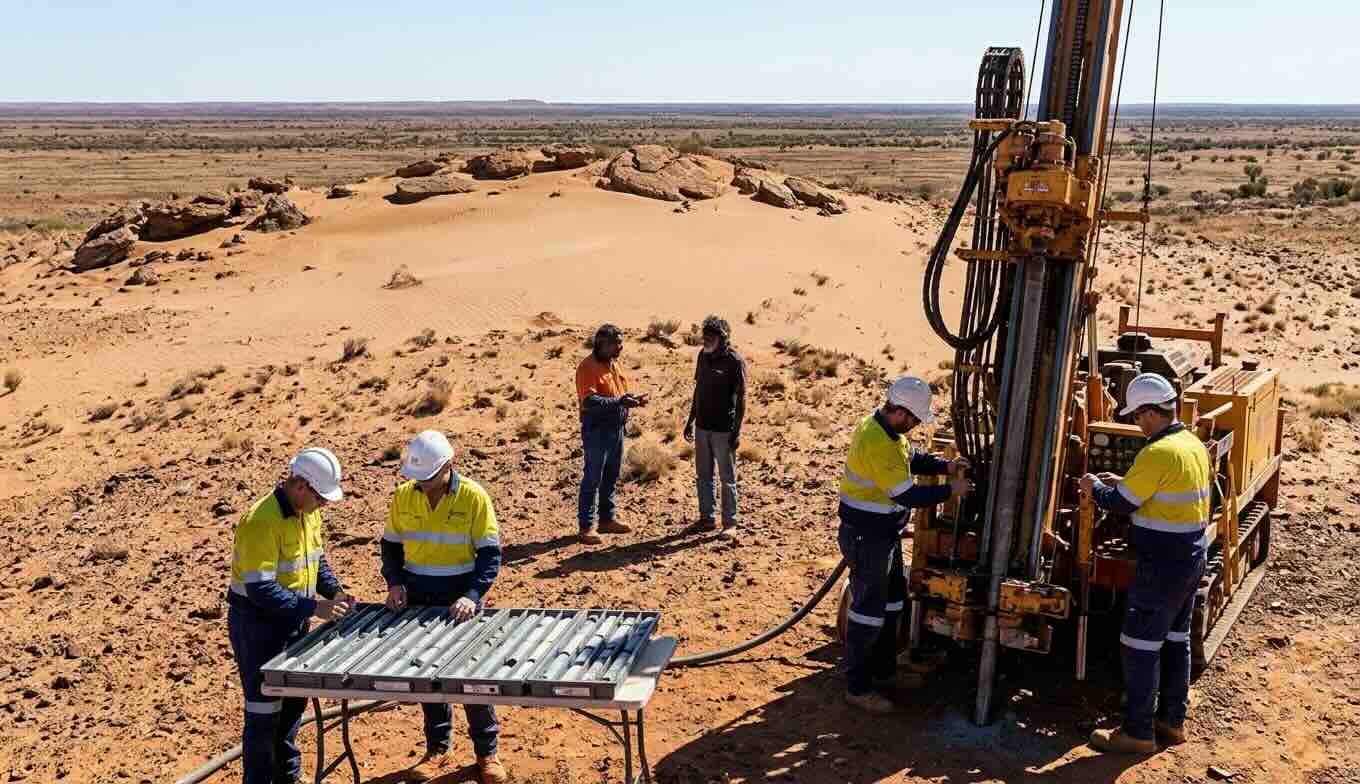
The Blackjack North Pit drilling program is scheduled for completion on 22 November, with an initial blast targeted for December 2026.
Meanwhile, site establishment activities at Far Fanning are progressing towards targeted mining commencement in the first quarter of calendar 2027.
These developments could provide additional ore supply and reduce operational reliance on existing mining areas.
However, successful expansion remains dependent on geological results, development expenditure and operational execution.
Insight: Can Higher Gold Production Transform Blackjack's Financial Outlook?
We think Native Mineral Resources is demonstrating credible operational progress, supported by stronger gold recoveries, record monthly output and positive quarterly operating cash flow. Its established processing infrastructure provides an advantage over early-stage gold developers, particularly if additional ore sources sustain production. However, the company's constrained liquidity and refinancing costs make sustainable free cash flow the critical measure of financial success. Without dependable unit-cost and capital expenditure forecasts, a reliable project-based valuation remains difficult to establish. Consistently stronger cash generation after operating expenses, development spending and financing costs would materially improve our assessment.


 Mark Elzayed•





