Alvo Minerals Limited (ASX: ALV) has extended rare earth mineralisation approximately 2 kilometres beyond previously tested areas at its Boa Vista prospect in Brazil, strengthening the exploration potential of its Bluebush project. With drilling now covering approximately 6.5 square kilometres, the discovery raises a critical question: can Alvo convert its expanding mineralised footprint into an economically recoverable resource?
The latest material announcement, released on 2 November 2026, provides encouraging evidence of a larger rare earth system, although metallurgical performance and development economics remain unproven.
Key Numbers
- 6.5km²: Approximate area covered by the latest Boa Vista drilling programme.
- 42 drill holes: Latest assay batch, with 15 returning significant intersections above 750 parts per million (ppm) total rare earth oxides (TREO).
- 1,364ppm TREO: Reported over 10 metres from 2 metres depth in hole BLG0358, including 6 metres at 1,527ppm.
- $227,000: Cash held at 30 September 2026, before approximately $1.054 million subsequently raised through share issuance and option exercises.
- $817,000: Net operating cash outflow during the September 2026 quarter.
Latest Drilling Strengthens Bluebush Potential
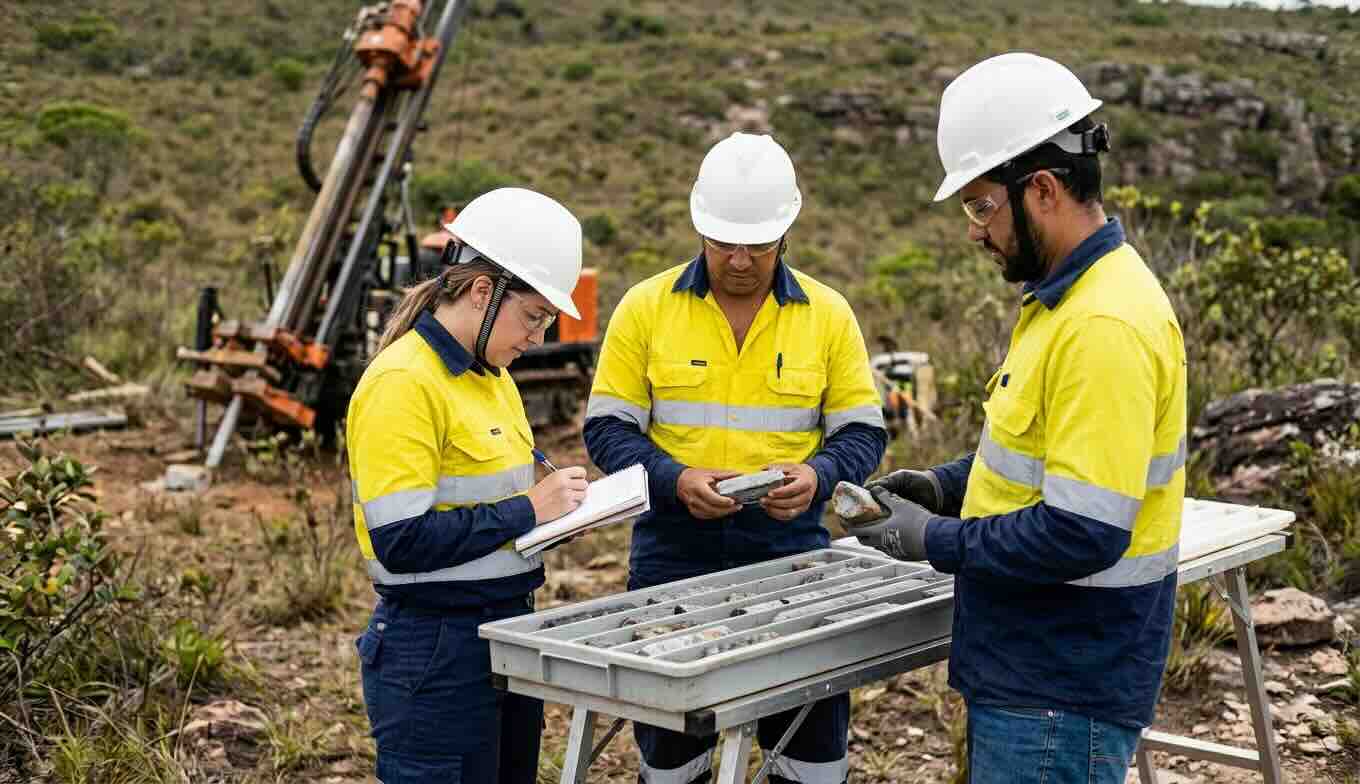
Laboratory assays from 42 auger holes on the recently acquired EZX tenement confirmed rare earth mineralisation extending approximately 2 kilometres south and west of the existing Boa Vista prospect.
Notable intersections included 10 metres at 1,364ppm TREO in BLG0358 and 8 metres at 1,291ppm TREO from surface in BLG0360.
The 15 significant intersections averaged 19% heavy rare earth oxides relative to TREO, while magnet and heavy rare earth oxides collectively represented 37%.
Importantly, dysprosium and terbium concentrations increased with depth, rising from approximately 13ppm near surface to 35ppm below 7 metres.
Many holes ended in mineralisation, suggesting existing shallow drilling may not have tested the full clay profile.
However, one unusually high-grade sample containing 4,259ppm TREO may reflect primary mineralisation rather than readily recoverable ionic clay material, highlighting the importance of metallurgical testing.
What Stands Out to Us
Bluebush occupies part of Brazil's Serra Dourada granite system, which also hosts the operating Serra Verde rare earth mine approximately 40 kilometres away.
USA Rare Earth's approximately US$2.8 billion acquisition of Serra Verde highlights strategic interest in heavy rare earth production outside Asia.
Nevertheless, geological proximity does not establish comparable project economics.
Funding remains another important consideration.
Alvo's September quarterly report recorded just $227,000 in cash and an estimated funding runway of 0.28 quarters based on historical operating expenditure.
An October placement raised $1 million before costs, supplemented by $53,950 from option exercises, improving liquidity while introducing additional shares.
At 7.1 cents on 5 November 2026, Alvo carried an indicative market capitalisation of approximately $24 million.
Without a maiden mineral resource estimate, established recovery rates or feasibility-level economics, a dependable project-based valuation remains difficult to establish.
What the Company Is Doing Now
Alvo is advancing exploration across Bluebush while progressing its separate Palma copper-zinc project.
Recent developments include acquiring the 575-hectare EZX tenement for US$210,000 and securing an agreement allowing it to earn up to 85% of the 656-hectare Florence tenement.
Maiden drilling has commenced at Florence, while samples submitted to ANSTO are undergoing metallurgical assessment.
At Palma, geophysical modelling has identified additional targets around the Touro discovery.
These programmes provide multiple exploration opportunities but also increase demands on available capital.
Insight: Can Alvo Convert Geological Scale Into Commercial Value?
We think Boa Vista's expanding mineralised footprint strengthens Alvo's exploration proposition, particularly given the strategic importance of dysprosium and terbium. However, mineralised area and headline grades alone cannot establish commercial value. Metallurgical recovery, resource continuity, clay thickness and funding capacity will ultimately determine the project's development prospects. Although October's capital raising provides additional financial flexibility, further exploration expenditure remains necessary. Our assessment is cautiously constructive on Bluebush's geological potential, but its valuation remains dependent on exploration expectations until reliable recovery data and resource estimates establish a credible economic pathway.


 Mark Elzayed•