A US$16 million (approximately A$23 million) counter-drone defence contract has opened another Middle Eastern market for Electro Optic Systems Holdings Limited (ASX: EOS). While the agreement is relatively small compared with the company's expanding defence order book, its strategic importance could extend well beyond the initial revenue.
The bigger question is whether EOS can convert new customer relationships into repeat business while managing the financial demands of increasingly complex defence contracts.
Key Numbers
- US$16 million (A$23 million): New Middle Eastern counter-drone defence order announced on 9 November 2026.
- 12 months: Expected timeframe for substantial delivery of the new contract.
- A$717 million: Order book at 30 September 2026, up 56% since December 2025.
- More than A$1.4 billion: Combined order book including the conditional Kuwait agreement.
- A$204 million: Available cash at 23 October 2026, following customer receipts.
A New Middle Eastern Defence Customer
EOS has secured an agreement with the armed forces of an undisclosed Middle Eastern nation to supply integrated counter-drone defence systems.
The agreement represents the company's first sale into that country through EOS or its MARSS business, potentially establishing another long-term defence customer relationship.
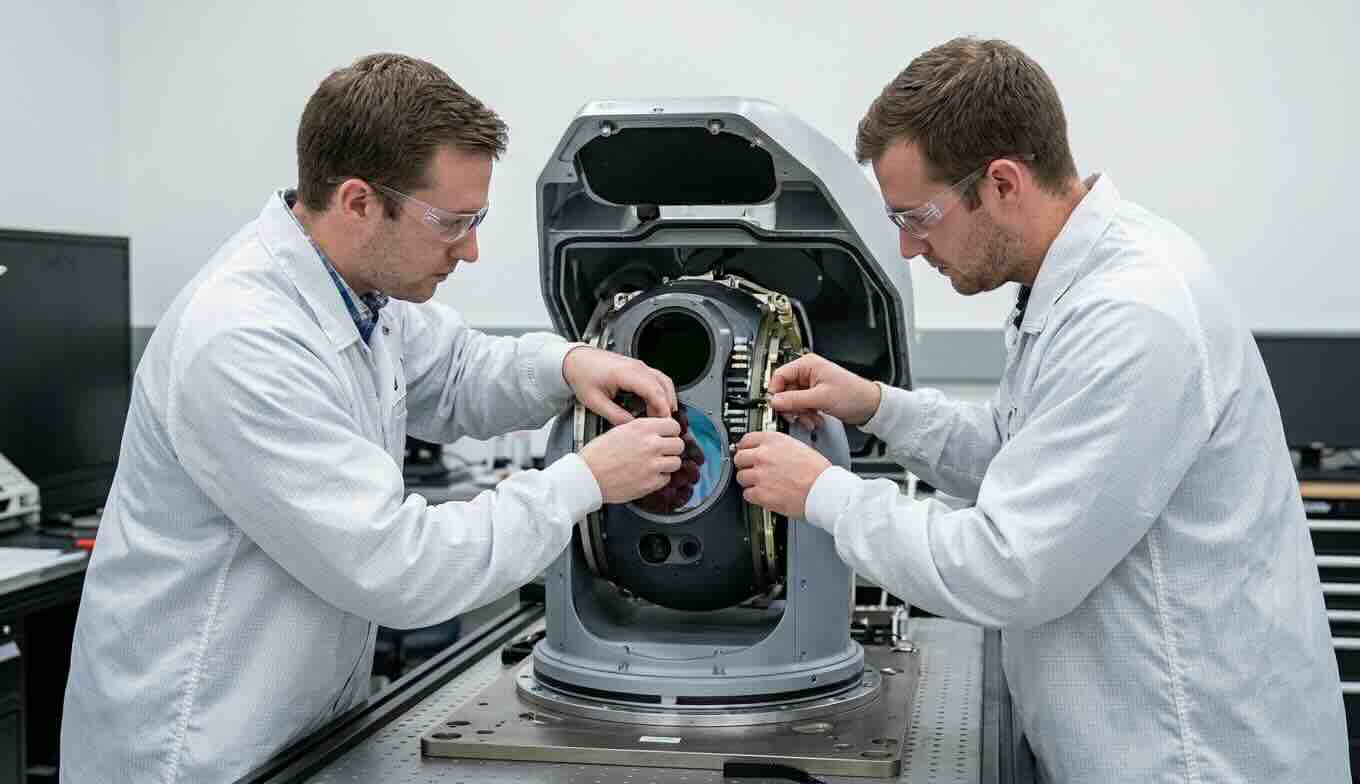
The systems will protect strategically important sites using sensors, electronic countermeasures and command facilities incorporating MARSS' NiDAR command-and-control technology.
NiDAR integrates information from multiple detection systems to identify, monitor and coordinate responses to aerial threats.
Substantial delivery is expected within 12 months.
Although EOS has previously converted modest initial orders into larger customer relationships, no additional contract has been confirmed.
What Stands Out to Us
The significance of the announcement lies in market expansion rather than its immediate financial contribution.
The A$23 million agreement represents approximately 6% of the midpoint of EOS' A$360 million to A$400 million full-year 2026 revenue guidance. However, its delivery schedule means the contract value should not be treated as additional 2026 revenue.
EOS has broadened its defence offering through MARSS, combining remote weapon systems, counter-drone capabilities and integrated command technology.
This provides opportunities to supply complete defence solutions rather than individual components.
However, larger integration contracts can create substantial working capital requirements.
During the September quarter, EOS recorded operating cash outflows of A$57.2 million despite receiving A$159.1 million from customers.
Available cash subsequently increased from A$133.1 million at September's end to A$204 million on 23 October.
EOS also held A$147.1 million in cash security deposits at 30 September, separate from available cash.
These figures highlight the importance of distinguishing liquidity from funds committed to contractual obligations.
What the Company Is Doing Now
EOS is expanding its defence operations internationally while advancing high-energy laser weapons, counter-drone systems and space surveillance technology.
Its most significant near-term opportunity remains the conditional A$700 million Kuwait counter-drone agreement announced in October.
That agreement requires additional financial guarantees, including an approximately A$150 million advance-payment guarantee, alongside outstanding export licensing conditions.
EOS has also been discussing possible contractual amendments.
Meanwhile, the company is progressing high-energy laser development with the Netherlands and expanding its manufacturing capabilities.
The MARSS acquisition creates additional commercial opportunities, although associated earn-out obligations could result in further share issuance and dilution.
EOS has also disclosed an ongoing ASIC investigation concerning earlier Goldrone contract announcements, representing another uncertainty for shareholders.
Insight: Can EOS Turn Defence Demand Into Sustainable Profits?
We think EOS is building a stronger competitive position through integrated counter-drone technology and expanding international customer relationships. The latest contract reinforces commercial momentum, but a growing order book does not automatically translate into stronger earnings. Contract guarantees, restricted cash and delivery costs could constrain financial returns. The conditional Kuwait agreement offers considerable potential, although its funding and regulatory requirements remain critical. Our assessment is cautiously positive on commercial prospects, but valuation remains difficult to justify without clearer evidence of sustainable margins, operating cash generation and contract execution.
 Alison Elzayed•