Australian equities: what moved the ASX 200?
The Australian sharemarket struggled on Monday, with the S&P/ASX 200 falling 8 points, or 0.09%, to close at 9,013.0. The modest decline concealed a clear divergence between sectors, as weakness in financials and property stocks offset a recovery in mining shares.
Financials fell 1.4%, with ANZ Group Holdings (ASX: ANZ) dropping 4.1% to A$38.69 following its FY26 results. The bank delivered statutory profit of A$7.27 billion and cash profit of A$7.59 billion. Adjusting for significant items in the previous year, cash profit increased 10%, broadly matching market expectations. However, operating income missed forecasts, while the bank increased its collective credit provision charge by 95% to A$222 million. The result highlighted pressure on income growth and growing concerns about credit conditions.
Ventia Services Group (ASX: VNT) was among the session's weakest performers, plunging 15.53% to A$4.84. Its new chief executive announced a restructuring targeting at least A$60 million in annualised savings by December 2027, alongside approximately A$30 million in implementation and discontinued project costs. More importantly, management warned that second-half FY26 revenue would decline year-on-year as telecommunications and energy projects were deferred. Its underlying net profit after tax growth guidance of 7% to 10% was maintained, but the market clearly wanted greater reassurance about revenue visibility.
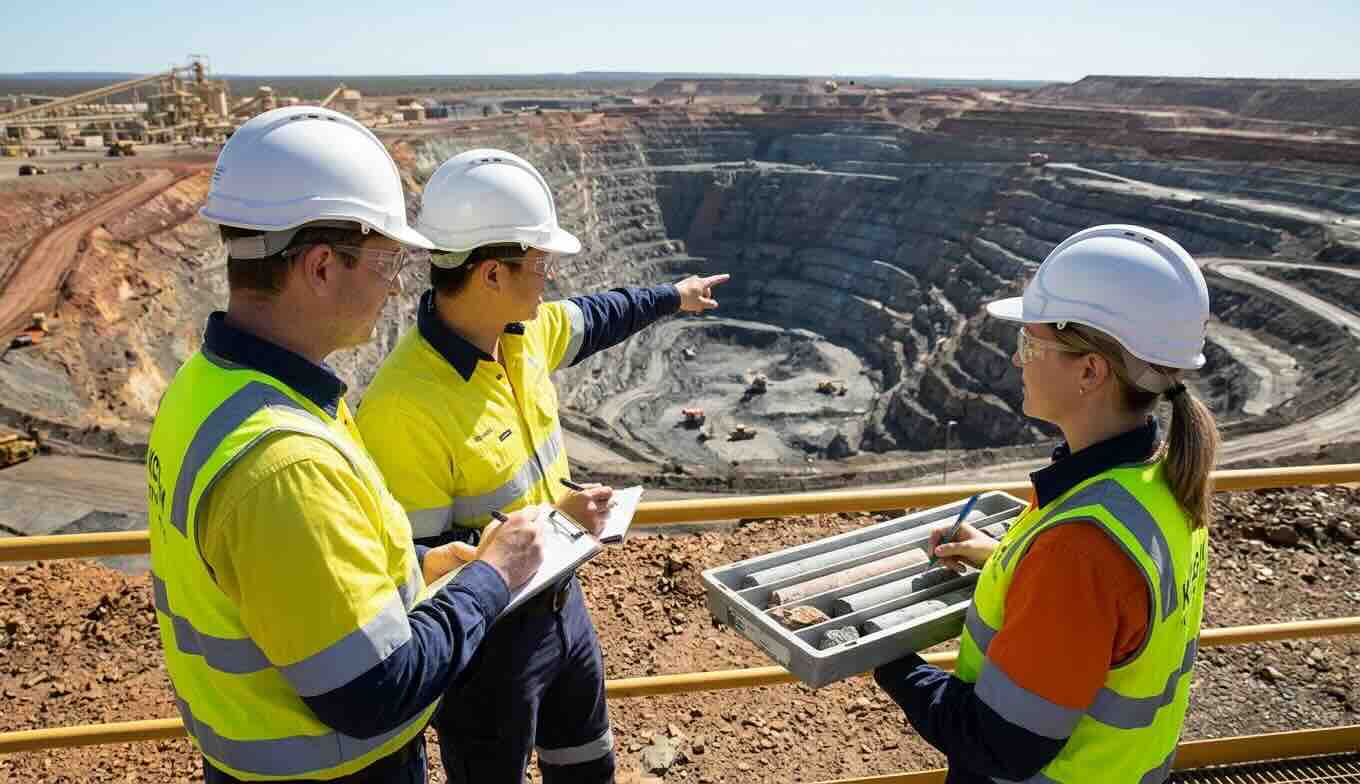
Mining shares provided some support. Materials gained 2.6%, with gold and copper prices recovering. Paladin Energy (ASX: PDN) advanced 11.33% to A$8.31, while Genesis Minerals (ASX: GMD) gained 7.24% to A$7.55. Dyno Nobel (ASX: DNL) fell 10.21% to A$3.43 following its FY26 results, while Lendlease Group (ASX: LLC) declined 5.43% to A$2.44 after the termination of a property transaction in Milan.
The Australian dollar, bonds and the RBA
The Australian dollar traded around US68.7 cents, remaining sensitive to movements in the US dollar and changing expectations for American interest rates.
Australian two-year government bond yields were around 4.83%, reflecting expectations that domestic monetary policy will remain restrictive. The Reserve Bank's recent decision to raise the cash rate by 25 basis points to 4.85% reinforces the challenge facing households and businesses.
The November policy outlook remains complicated by persistent inflation and higher global energy costs. The RBA expects inflation to remain above its 2% to 3% target range until late 2027, making an early return to monetary easing increasingly difficult.
Global markets: China, Asia and Europe
Asian markets recovered on Monday following last week's technology-led sell-off. Japan's Nikkei 225 advanced approximately 3.5%, while South Korea's Kospi gained 1.8% and Taiwan's benchmark rebounded more than 6%. The recovery suggests some buying interest has returned after significant losses, although concerns about the economics of artificial intelligence infrastructure remain.
China delivered a mixed inflation picture. October consumer inflation slowed to 0.7% from 0.9% in September, while producer prices increased 5.7%, accelerating from 5.0% and reaching their strongest annual growth since June 2022.
The divergence is important. Higher industrial input costs are supporting producer prices, but subdued household demand is limiting the ability of businesses to pass those increases through to consumers. For Australian exporters, this creates an uneven outlook: stronger industrial pricing is encouraging, but evidence of a sustained improvement in Chinese domestic demand remains limited.
European markets had not yet opened at the reporting cutoff.
Wall Street: US stocks and the Federal Reserve
Wall Street finished Friday with a mixed session. The S&P 500 gained 0.31% to 7,376.86, while the Nasdaq Composite advanced 1.09% to 24,579.42. The Dow Jones Industrial Average slipped 0.46% to 51,285.73, while the Russell 2000 added 0.9% to 2,754.11.
Despite Friday's recovery, the major indices finished the week lower, with the Nasdaq losing 3.4% and the S&P 500 declining 2.7%. Technology shares remain particularly sensitive to questions about AI spending, valuations and future profitability.
The latest US employment figures added another complication. October payrolls increased by 165,000, more than twice economists' expectations, while unemployment remained at 4.1%. Average hourly earnings increased 0.4% month-on-month, although annual wage growth remained at 3.1%.
The stronger employment picture has lifted market expectations of a December Federal Reserve rate increase to nearly 80%. This is an important development because higher interest rates could place further pressure on technology valuations and broader equity market sentiment.
Commodities: gold, oil and industrial metals
Gold recovered, with spot prices rising approximately 1.4% to US$4,127 an ounce during the Australian session. Copper also strengthened, gaining around 1.2% to US$6.50 a pound. Both developments provided support for Australian mining shares.
Brent crude traded around US$97.44 a barrel, easing as expectations of further US military action against Iran moderated following indications that diplomatic negotiations could progress.
The commodity picture remains complicated by conflicting forces. Higher energy costs are contributing to industrial inflation, while geopolitical uncertainty continues to support demand for defensive assets. For Australian producers, the sustainability of these prices will matter more than a single session's recovery.
What to watch next
Tuesday's US inflation figures will be the immediate international catalyst, particularly given the recent strength in employment and the growing possibility of another Federal Reserve rate increase. Any upside surprise could renew pressure on technology shares and bond-sensitive sectors.
We should also monitor China's demand indicators and the next moves in gold, copper and oil. Domestically, ANZ's results and Ventia's restructuring announcement highlight the importance of distinguishing headline earnings growth from underlying business conditions.
Our assessment is that the market is attempting to stabilise after last week's technology correction, but the recovery remains fragile. Strong employment and higher industrial prices are supporting economic resilience, while persistent inflation, elevated borrowing costs and uneven Chinese demand continue to complicate the outlook. The next few sessions should reveal whether this is the beginning of a sustainable recovery or simply a temporary pause in market volatility.

 Mark Elzayed•