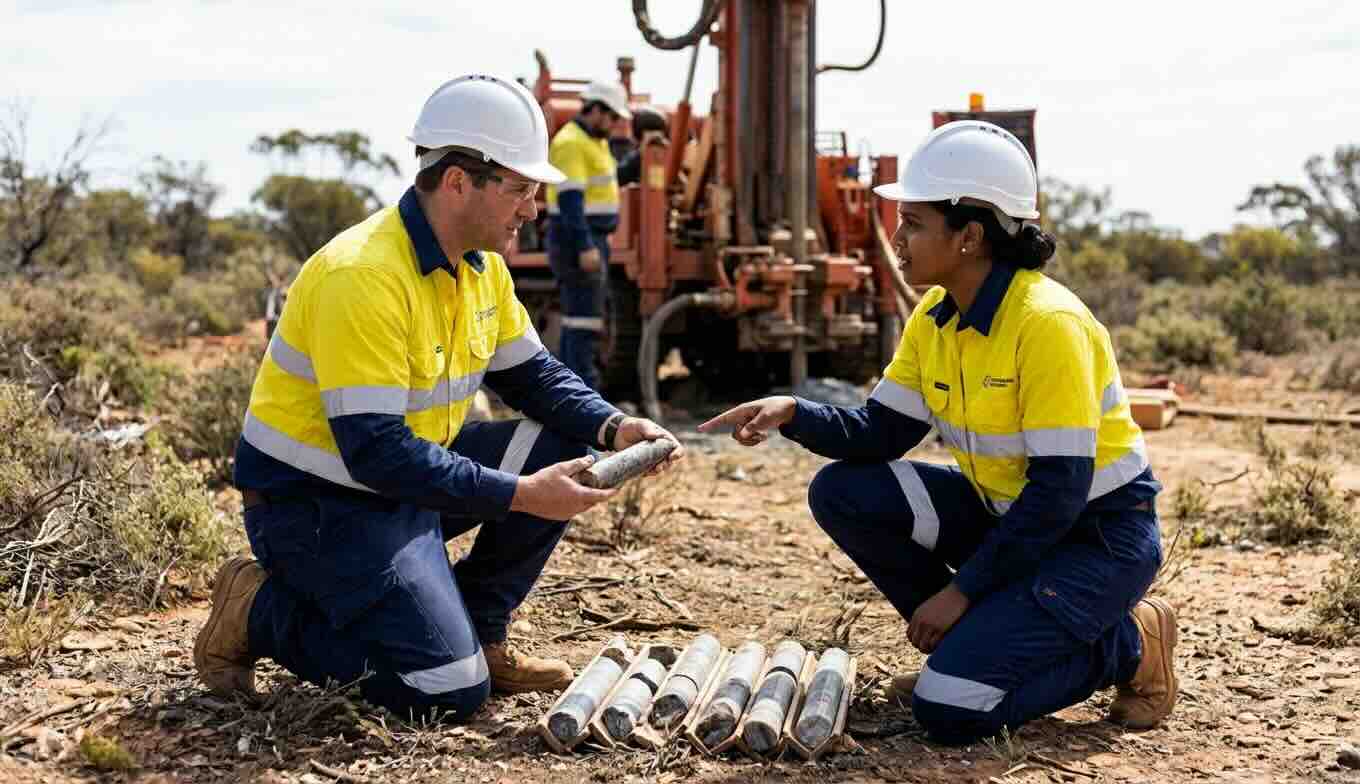
Sheffield Resources Limited (ASX: SFX) has secured another financial lifeline for its Thunderbird mineral sands operation, extending critical debt repayment relief until 18 December 2026. With record production and falling operating costs, the company's immediate challenge is no longer simply lifting output. It is proving Thunderbird can generate enough sustainable cash to support its debt obligations.
Key Numbers
- 18 December 2026: Extended deadline for deferred principal and interest repayments under Thunderbird's senior secured loan facilities.
- 3.44 million tonnes: Record ore mined during the September 2026 quarter, approximately 20% higher than the preceding quarter.
- 245,982 tonnes: Concentrate production, increasing 21% quarter-on-quarter.
- $217 per tonne: C1 cash production costs, down from $261 per tonne in June.
- $3.4 million: Sheffield's unaudited corporate cash balance at 30 September 2026, separate from the joint venture's cash.
The Latest Development: More Time, but No Permanent Solution
On 30 October, Sheffield confirmed that Kimberley Mineral Sands (KMS), its 50:50 joint venture with China's Yansteel, had obtained further repayment deferrals and covenant waivers from lenders Sheng Feng and the Northern Australia Infrastructure Facility.
The arrangements cover principal and interest obligations originally due between December 2025 and September 2026.
Negotiations have also progressed towards a proposed standstill agreement extending repayment relief until 30 June 2027.
However, that longer agreement remains unsigned.
This distinction is critical. Temporary lender support provides operational breathing room, but it neither eliminates outstanding debt nor establishes a sustainable capital structure.
Sheffield and Yansteel's Australian subsidiary also remain sponsors and guarantors of the senior secured facilities.
What Stands Out: Production Is Improving Faster Than Cash Flow
Thunderbird's operational recovery is increasingly measurable.
September-quarter concentrate shipments reached 234,177 tonnes, including approximately 56,444 tonnes of zircon concentrate.
Realised zircon pricing increased 8% to US$610 per tonne, while ilmenite achieved US$123 per tonne under its offtake arrangement with Yansteel.
Higher production volumes helped reduce C1 cash costs by approximately 17%.
However, stronger production has not yet translated into meaningful cash generation.
On a 100% joint venture basis, Thunderbird generated just $166,000 in net operating cash inflows during September, despite customer receipts of $63.6 million.
After $2.34 million in capital expenditure and $3.05 million in lease repayments, KMS recorded a $5.22 million net cash outflow before exchange movements.
Joint venture cash consequently declined to approximately $2.08 million at quarter-end.
These figures highlight the gap between improving mine productivity and financial sustainability.
What Sheffield Resources Is Doing Now
Management is concentrating on sustaining higher mining volumes, improving processing efficiency and controlling expenditure.
Thunderbird's September performance benefited from operational improvements and reduced waste-mining requirements.
Meanwhile, Yansteel continues providing short-term working capital support.
Sheffield has also suspended funding for its South Atlantic mineral sands option in Brazil, prioritising available capital for Thunderbird.
These measures demonstrate a narrower operational focus, although continued external financial support remains an important dependency.
Insight: Can Thunderbird's Recovery Protect Shareholder Value?
We think Thunderbird's improving production performance provides credible evidence that operational difficulties are being addressed. Its established mineral sands resource, processing infrastructure and offtake arrangements offer genuine commercial advantages. However, financial leverage remains the decisive concern. Sheffield's approximately $15 million market capitalisation reported in its October quarterly disclosure cannot be assessed independently of joint venture debt, funding commitments and potential shareholder dilution. A defensible equity valuation requires clearer evidence of sustainable cash generation and revised debt terms. Until then, operational improvements alone are insufficient to establish meaningful underlying equity value.
What Happens Next?
The immediate catalyst is securing a binding standstill agreement before 18 December 2026.
Operationally, Sheffield's December-quarter guidance targets 175,000 to 200,000 tonnes of ilmenite concentrate and 45,000 to 55,000 tonnes of zircon concentrate.
Forecast C1 costs remain between $220 and $230 per tonne.
Delivering these targets while strengthening operating cash flow would improve Sheffield's position in restructuring negotiations.
However, failure to secure longer-term lender support could intensify financing pressure and expose existing shareholders to further dilution or restructuring risks.
For Sheffield, the next milestone is not simply producing more mineral sands. It is demonstrating that Thunderbird can generate sustainable cash after operating costs, capital expenditure and financing obligations.



 Alison Elzayed•