Saturn Metals (ASX: STN) is moving closer to a major development milestone at its 2.83-million-ounce Apollo Hill Gold Project in Western Australia, supported by advancing engineering, important regulatory progress and a strengthened balance sheet.
With $110.7 million in cash at 30 September 2026 and a definitive feasibility study targeted for completion during the December quarter, Saturn is establishing a more compelling pathway towards becoming an Australian gold producer.
The combination of substantial gold resources, encouraging project economics and further exploration potential positions Apollo Hill as an increasingly interesting development opportunity.
Key numbers: Saturn Metals at a glance
- 2.83 million ounces: Apollo Hill's gold resource, representing 174 million tonnes grading 0.51 grams per tonne.
- 1.59 million ounces: Maiden ore reserve underpinning the proposed mining operation.
- $110.7 million: Cash reserves at 30 September 2026.
- $973 million: Pre-tax project net present value at an 8% discount rate under the December 2025 pre-feasibility study.
- 51%: Estimated pre-tax internal rate of return under the study's base-case assumptions.
Apollo Hill's development momentum continues to build
Saturn's September 2026 quarterly activities report highlighted significant progress towards advancing Apollo Hill from exploration and feasibility work into potential mine development.
The granting of mining lease M31/496 marked an important regulatory achievement, while submission of the project's environmental review document on 23 September 2026 advanced the remaining approvals process.
Engineering activities also continued progressing, with process engineering exceeding 70% completion during the quarter.
Together, these milestones provide increasing clarity around the project's development requirements ahead of its definitive feasibility study.
Targeted for completion during the December 2026 quarter, the study is expected to refine construction costs, operating assumptions and potential funding requirements.
Successful delivery would represent another major step towards establishing Apollo Hill as a commercially viable gold operation.
Expanding gold resources provide additional growth potential
Apollo Hill's mineral resource increased by approximately 26% in June 2026, reaching 2.83 million ounces following a 590,000-ounce addition.
Approximately 77% of contained gold is classified as Measured or Indicated, providing a substantial geological foundation for future mine planning.
Importantly, exploration continues to demonstrate potential beyond the existing resource boundary.
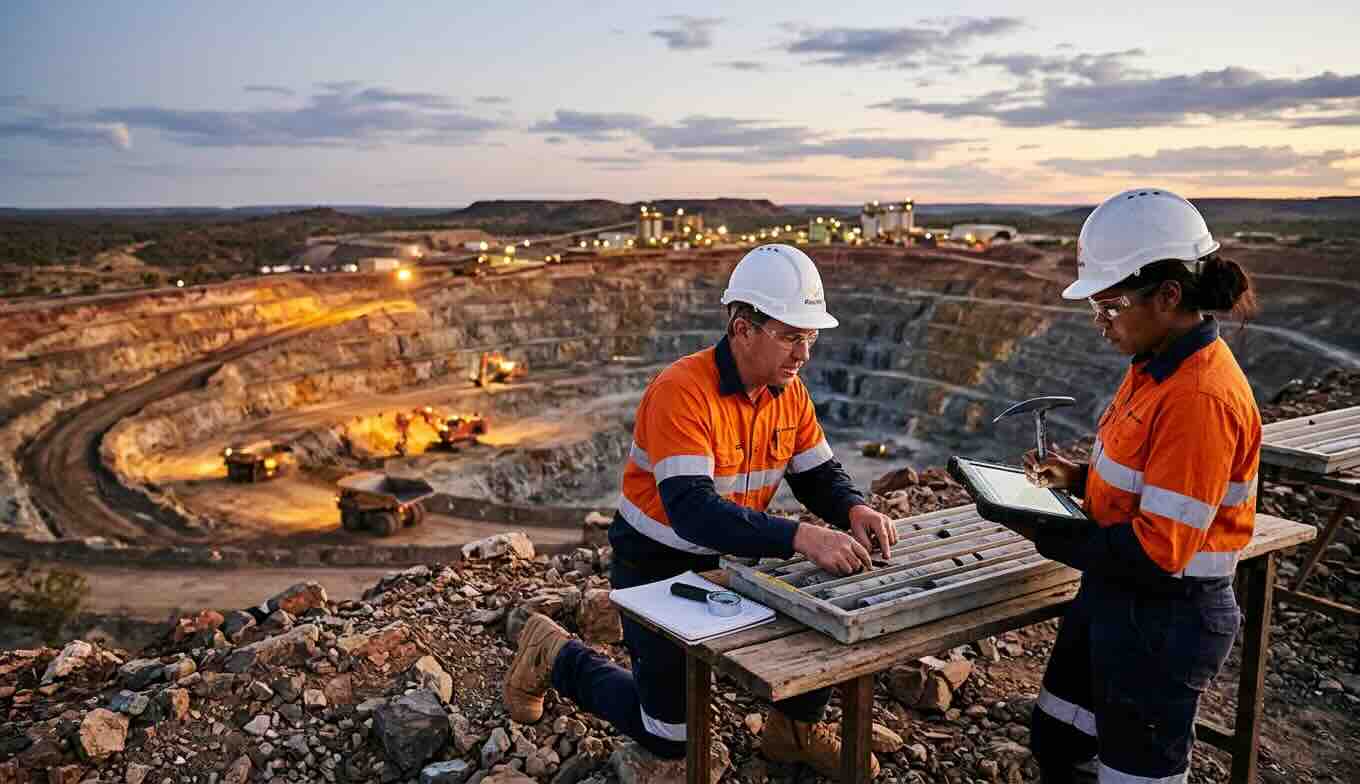
Drilling has identified gold mineralisation extending approximately one kilometre north of Apollo Hill, including an intersection of five metres grading 11.26 grams per tonne gold from 49 metres.
These results suggest potential opportunities to expand the resource base through additional exploration.
Saturn is also progressing exploration at its Aquarius prospect, where a 26.5-kilometre gold trend offers another opportunity for longer-term resource growth.
While further drilling is required, the expanding exploration footprint provides potential upside beyond the project's established development case.
Strong project economics support the production opportunity
Apollo Hill's December 2025 pre-feasibility study outlined a proposed heap-leach operation processing 10 million tonnes of ore annually.
The development plan forecasts approximately 106,000 ounces of annual gold production during its main production years, with approximately 1.31 million ounces recovered across the proposed mine life.
Using an assumed gold price of $4,300 per ounce, the study estimated:
- $2.5 billion in life-of-mine EBITDA.
- $472.4 million in pre-production capital expenditure.
- $2,464 per ounce in all-in sustaining costs.
- 2.3 years to recover initial capital expenditure.
These projections suggest Apollo Hill could generate meaningful operating cash flow if development proceeds successfully.
The project's scale and estimated operating economics provide an encouraging foundation, although final returns will depend on gold prices, construction execution and actual operating performance.
Strengthened funding puts Saturn in a better position
Saturn finished September 2026 with $110.7 million in cash, compared with $40.4 million at the beginning of the quarter.
Its strengthened financial position followed a $100 million placement and a $21.28 million share purchase plan, with $39.79 million of placement proceeds still subject to Foreign Investment Review Board approval.
During the quarter, operating cash outflows totalled $1.1 million, alongside $7.6 million in exploration and evaluation expenditure.
This financial flexibility supports ongoing feasibility work, permitting and exploration while management progresses development financing.
Although the project's estimated $472.4 million construction requirement means additional funding remains necessary, Saturn enters this next phase with a considerably stronger financial foundation.
Insight: Could Apollo Hill become Saturn's defining growth opportunity?
What stands out to us is Saturn's increasingly compelling combination of resource scale, project economics and development readiness. Apollo Hill's $973 million pre-tax project valuation highlights substantial potential, while the $110.7 million cash position provides flexibility to advance critical milestones. We see a credible pathway towards long-term value creation if the definitive feasibility study supports the existing economic assumptions and management secures suitable development financing. The next important test will be whether updated capital costs and production forecasts reinforce Apollo Hill's commercial potential.


 Mark Elzayed•