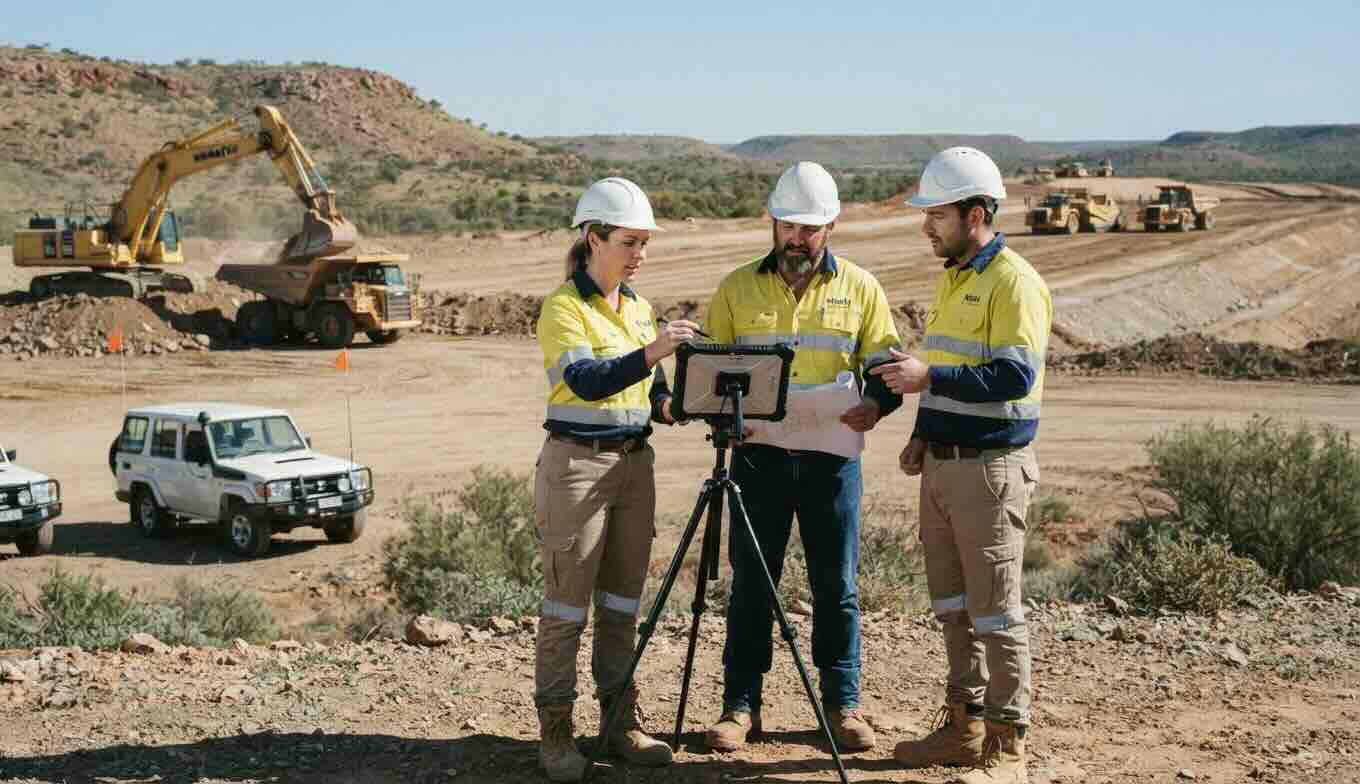
The ASX Recovers Ground: Mining Stocks Lead Thursday's Rebound
The Australian sharemarket finished higher on Thursday, with the S&P/ASX 200 climbing 71.4 points, or 0.82%, to close at 8,763.8 points. The recovery followed Wednesday's 0.39% decline and marked a welcome improvement after several difficult sessions for mining stocks.
Resources companies provided much of the support, as buyers returned to beaten-down mining shares. The rebound followed a recovery in US markets overnight and improved sentiment towards commodities, although the underlying outlook for some major Australian producers remains challenging.
The recovery was not evenly distributed. Financial and healthcare shares faced pressure, while several individual company developments generated significant movements.
Ramsay Health Care (ASX: RHC) was among the notable decliners, falling after an approximately $802 million block trade placed pressure on its shares. Lendlease (ASX: LLC) also remained under pressure, extending its recent losses.
Another development worth watching involved Flight Centre Travel Group (ASX: FLT), which disclosed a cyber security incident involving a third-party accommodation booking system. The company launched an investigation and engaged specialist assistance. The potential consequences will depend on the extent of the incident and whether customer information or business operations were affected.
The broader recovery is encouraging, but one stronger session does not necessarily signal a lasting change in market direction.
Inflation Is Becoming a Bigger Problem for Australian Households and Businesses
Australia's latest inflation figures have added another complication to the interest rate outlook.
Annual inflation increased to 4.9% in October, up from 4.3% in September. More importantly, underlying inflation, which removes some unusually large price movements to provide a better indication of persistent inflation, increased to 3.8% from 3.6%.
Housing costs rose 6.4% over the year, while transport costs increased 10.6%.
This matters because persistent inflation makes it harder for the Reserve Bank of Australia (RBA) to reduce interest rates. If borrowing costs remain elevated, households have less money available for discretionary spending, potentially affecting retailers, restaurants and other consumer businesses.
Property companies and businesses carrying substantial debt could also face higher financing expenses.
For Australian banks, the picture is more complicated. Higher interest rates can support lending income, but they can also increase pressure on borrowers and potentially lead to more overdue loans.
The RBA's next decisions will therefore be particularly important for the domestic sharemarket.
The Australian Dollar Holds Near US66 Cents as Global Rate Expectations Shift
The Australian dollar traded around US66.4 cents on Thursday, recovering slightly after the latest inflation figures.
The currency's movement reflects competing pressures. Higher Australian inflation can make Australian interest rates more attractive, while expectations of further US rate increases support the US dollar.
Australian 10-year government bond yields were around 4.80% in Thursday morning trading, compared with approximately 4.86% in the US.
For Australian companies, currency movements have different consequences. A weaker Australian dollar can increase the value of overseas earnings when converted into AUD, benefiting exporters and companies with substantial international operations. However, businesses importing equipment, products or materials may face higher costs.
Wall Street's AI Sell-Off Is Stabilising, But Technology Shares Remain Under Pressure
US markets finished Wednesday mixed, recovering substantially from their earlier losses.
The S&P 500 fell 0.25% to 7,182.78, the Nasdaq Composite declined 0.62% to 23,585.80, while the Dow Jones Industrial Average gained 0.33% to 50,182.95.
The Nasdaq had fallen more than 4% during the session before bargain buying helped reduce the losses.
Technology shares remained under pressure. Nvidia fell 3.9%, while Amazon declined 3.1%. Concerns about artificial intelligence valuations, substantial technology spending and potential new US trade tariffs contributed to the uncertainty.
The US market is closed on Thursday for Thanksgiving, with trading resuming on Friday.
For Australian shareholders, the technology sell-off is worth monitoring because it can influence sentiment towards local technology companies. However, Australian businesses should be assessed on their own revenue growth, customers and profitability rather than movements in US technology shares alone.
Gold, Iron Ore and Oil: Commodity Prices Remain Important for the ASX
Commodity markets have experienced considerable volatility.
Gold traded around US$3,583 an ounce during Thursday morning Australian trading, following a significant sell-off. Higher US interest rate expectations have made the precious metal less attractive because it does not generate interest income.
This creates a challenging environment for Australian producers such as Northern Star Resources (ASX: NST) and Evolution Mining (ASX: EVN).
Iron ore was around US$88.30 a tonne in Thursday morning trading, while Brent crude oil approached US$94.76 a barrel.
For major iron ore producers such as BHP Group (ASX: BHP), Rio Tinto (ASX: RIO) and Fortescue (ASX: FMG), sustained weakness in iron ore prices could reduce revenue and operating profits.
Higher oil prices can benefit energy producers such as Woodside Energy (ASX: WDS), but they can also increase fuel and transportation expenses for Australian businesses.
The important point is that Thursday's mining recovery does not necessarily indicate that commodity prices have entered a sustained upward trend.
Five Things Worth Checking in Your Share Portfolio
1. Mining exposure: Review your exposure to iron ore, gold and other commodities. Lower commodity prices can affect mining revenue even when production remains strong.
2. Technology valuations: Consider whether technology companies have sustainable revenue growth and a credible path towards profitability as global enthusiasm for AI businesses fluctuates.
3. Interest rate sensitivity: Property companies, businesses carrying substantial debt and consumer-facing companies could face additional pressure if borrowing costs remain elevated.
4. Currency exposure: Companies earning substantial overseas revenue may benefit from a weaker Australian dollar, while import-dependent businesses could face higher expenses.
5. Dividend sustainability: Check whether dividend-paying companies generate sufficient cash flow to maintain distributions if financing and operating costs increase.
What Could Move the Market Next?
The immediate focus will be Friday's US trading session, particularly whether technology shares can stabilise after several volatile sessions.
Australian inflation will also remain central to the interest rate outlook. With annual inflation at 4.9% and underlying inflation increasing to 3.8%, the RBA faces a difficult balancing act between controlling prices and supporting economic activity.
For the ASX, developments in China, iron ore prices and the outlook for major mining companies will remain important.
Thursday's 0.82% recovery is a positive development, but the broader market still faces several challenges. The combination of persistent inflation, uncertain interest rate expectations and global technology volatility means that company earnings and financial strength deserve particular attention in the sessions ahead.

 Mark Elzayed•